Infinite-Uptime

Author: Iu_Zer0

  • Predictive Maintenance & IoT Impact on Mining

    Predictive Maintenance & IoT Impact on Mining

    Predictive Maintenance & IoT Impact on Mining

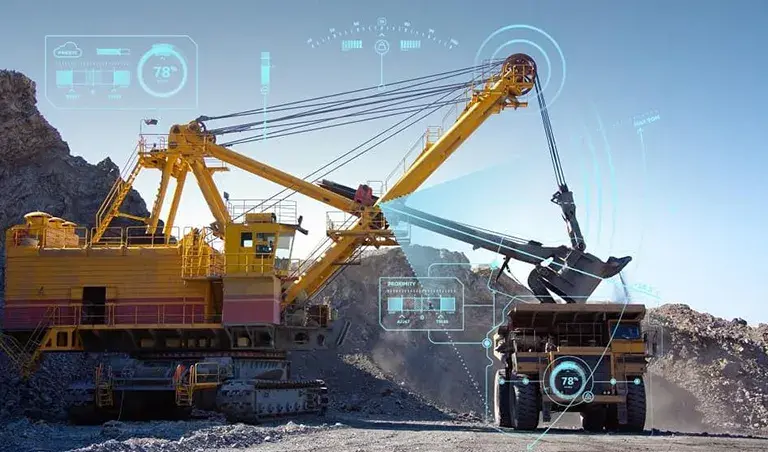
    A medium shot of a large yellow excavator is shown on the left of the image, while the other yellow and black vehicle, on the right, is a dump truck. A teal holographic screen with charts, diagrams, and statistics are displayed in the upper right. There are a series of red concentric circles at the top of the excavator. Dark gray and brown rocks, with some greenery, are in the background of the excavator. A cloudless light blue sky can be seen in the upper part. The image is captured in a photograph style, with natural lighting.

    The mining industry is one of the oldest & most hazardous commercial sectors where the use and implementation of modern technology are very gradual. Mining companies utilize a plethora of expensive equipment in a high stakes & cost environment. In these cases, asset health is critical to the safety & profitability of the mine.

    This is where IoT-driven Predictive maintenance can be a game changer. It has the potential to collect and analyze environmental and equipment data instantaneously and conduct real-time risk and area evaluation. It reduces the risk of downtime & loss due to machine failure and reduces overall maintenance & spare part costs of high capital-intensive machinery. The application of IoT in the mining industry is quintessential because of its advantages for large-scale operations in mining, where the operating environment is constantly changing & workforce operates in a compact, adapting, and potentially hazardous environment.

    Let’s first try to understand the what makes maintenance for the mining industry difficult:

    Challenges in the mining industry

    Disruptive & exorbitant impact of equipment failure in mines
    Equipment failure is the worst nightmare for mines. A standard mining operation spends 35-50 percent of its yearly operations budget on just asset maintenance & repairs. Unpredictable equipment failure can disrupt production & a considerable dent in the bottom line.

    Remote monitoring of equipment at far-off locations


    Mines are typically located far away from civilization. So in case of unplanned downtime, it takes time to get expert maintenance personnel and spare parts to reach, diagnose and repair the equipment. These transportation delays & costs impact the budget as well as profitability.Workforce safety depending on asset health

    Worker health & safety remains a big concern in the mining industry due to the difficult working conditions. Furthermore, as mines get deeper, the likelihood of a collapse & danger increases. While safety in mines has improved dramatically over the years, the fatalities caused by asset malfunction are a big reason for on-site hazards.Unreliable connectivity options

    Additionally, because more mines are constructed in off-grid locations, providing stable electrical infrastructure to power mining operations and appropriate water supply becomes increasingly tricky. Connectivity is limited or unreliable, particularly in underground mines, and the 3G/4G signals may be difficult to pick up in remote regions.

    Types of machine maintenance in mining

    The different types of machine maintenance are:

    1. Reactive Maintenance/ Run-to-Failure Maintenance: This refers to repairs performed after a machine has already failed and it is unexpected and thus leads to emergency rushed repairs.
    2. Preventive Maintenance: This refers to any planned or scheduled machine maintenance that aims to identify and repair problems before they cause failure. It can be annual/bi-annual. But it cannot prevent asset failure between two schedules or unnecessary downtime.

    3. Condition-based Maintenance: It focuses on monitoring the current status of assets to undertake maintenance when evidence of decreasing performance or approaching breakdown is detected.

    4. Predictive Maintenance: It expands on condition-based maintenance by utilizing instruments and sensors to continuously evaluate machinery performance & flagging off any anomaly and its root cause before it results in a full-blown asset failure.

    Predictive Maintenance in mining can cause many benefits – direct & indirect.

    Some of the benefits of Predictive Maintenance are:

    • Reduced Downtime: Utilizing predictive maintenance, you can anticipate troubles ahead of time, decrease machine downtime, increase uptime by 15-20%, schedule maintenance as needed, and thus extend the life of an old machine by up to 20%.
    • Increasing Productivity: It ensures that both planned and unplanned downtime is kept to a minimum, resulting in fewer interruptions to production and a significant increase in overall productivity.
    • Higher Production Capacity: Asset availability of high performing & critical assets in mines helps plan and optimize production capacity, which is crucial for effective management & production planning and staying on schedule.
    • Lowered Maintenance & Spare Part Costs: Maintenance and spare part costs are significantly lower for preventative maintenance since all machines in the manufacturing process are continuously monitored and repaired before a problem becomes severe.

    • Enhancing Workplace Safety: Predictive maintenance can reduce the risk of work-related accidents by identifying any discrepancies that could lead to an accident on-site. Predictive maintenance ensures a sanitary and healthy environment in the plant while reducing safety risks by up to 14%.
    • Proactive Decision Making: The implementation of IoT enables mining maintenance managers to detect when there is a breakdown or a drop in performance, enabling them to react quickly and effectively. In addition, monitoring, obtaining, and analyzing data from particular mining equipment over a period may help them understand how the overall efficiency of the process itself can be improved.
    Conclusion

    The mining industry has been a critical sector globally for centuries. With the right Predictive Maintenance solution, mine maintenance managers can ensure that the production continues without impacting commercial efficiency while ensuring worker safety. A sound & functioning asset also ensures a greener footprint and fewer hazards, proving to be less dangerous for the environment.

    Want to know more about how a competent Predictive Maintenance solution by Infinite Uptime is helping some of the largest mining companies improve asset & operational efficiencies through predictive maintenance in mining and IoT mining?

    Infinite Uptime offers responsively designed machine diagnostics, remote condition monitoring, and predictive maintenance solutions in diverse industries such as Cement, Steel, Mining and Metals, Tire, Paper, Automotive, Chemicals, FMCG, Oil and Gas, and more. To understand how predictive maintenance applies to your process plant and can help in achieving plant reliability, explore the comprehensive solutions of Infinite Uptime.

    Click here to schedule a demo with our team of experts.

    FAQs


    What are the main challenges faced by the mining industry in maintaining equipment?

    The mining industry grapples with the high costs of equipment failure, spending up to 50% of operational budgets on maintenance. Remote locations exacerbate downtime as getting personnel and parts to sites is time-consuming and costly. Safety concerns due to equipment health also pose significant risks in hazardous environments.


    How does Predictive Maintenance differ from other maintenance strategies like Preventive and Reactive Maintenance?

    Predictive Maintenance uses IoT and AI to monitor equipment in real-time, predicting failures before they occur. This proactive approach reduces downtime, extends equipment life, and lowers maintenance costs compared to reactive (fixing after failure) and preventive (scheduled maintenance) strategies.


    What are the direct benefits of implementing Predictive Maintenance in mining operations?

    Predictive Maintenance reduces downtime by 15-20%, enhances productivity by minimizing interruptions, and optimizes production capacity. It lowers maintenance and spare part costs by monitoring equipment continuously and prevents costly breakdowns, thus improving overall operational efficiency.


    What are the types of machine maintenance strategies used in the mining industry?

    Mining operations employ Reactive Maintenance (fixing after failure), Preventive Maintenance (scheduled check-ups), Condition-based Maintenance (monitoring performance for signs of wear), and Predictive Maintenance (AI-driven real-time monitoring) to ensure equipment operates efficiently and safely.


    How does IoT enhance Predictive Maintenance in the mining industry?

    IoT enables real-time data collection from mining equipment, allowing for predictive analytics and condition monitoring. This data-driven approach facilitates proactive decision-making, improves operational efficiency, and enhances safety by identifying potential hazards before they escalate.


    What considerations are important when choosing a Predictive Maintenance solution for a mining operation?

    It’s crucial to select a solution that integrates seamlessly with diverse equipment types and can operate in remote, off-grid locations with limited connectivity. Deployment speed and scalability are also critical to ensure minimal disruption and rapid ROI across large-scale mining operations.


    How does Predictive Maintenance contribute to safety and sustainability in mining?

    By preemptively identifying equipment issues, Predictive Maintenance helps create safer working conditions in mines, reducing the risk of accidents and environmental hazards. It also supports sustainable practices by optimizing resource use and minimizing operational disruptions.


  • How to choose a maintenance solution for your plant in 2022?

    How to choose a maintenance solution for your plant in 2022?

    How to choose a maintenance solution for your plant ?


    Revolutions are synonymous with disruptions. Industry 4.0 is nothing different. It demands new and advanced technologies for manufacturing plant maintenance and discarding obsolete plant maintenance processes at a much faster pace. It sometimes becomes overwhelming to understand and adopt new technologies as a plant head. So, here, we have an article to help you choose the right maintenance solution for your plant.

    In this article, we’ll majorly talk about how you can choose the right Predictive Maintenance solution for your plant. But let’s start with the 3 basic types of industrial plant maintenance solutions available in the market.

    Types of industrial plant maintenance

    Reactive Maintenance

    Maintenance that is out of reaction rather than duty and is performed only after the equipment is finally broken. This obsolete maintenance strategy can save you money in the short term but eventually increases your losses by increasing machine downtime, inefficiency, and frequent failures

    Preventative Maintenance

    Preventative plant maintenance requires scheduled check-ups routined on industry standards, and it involves timely maintenance and carry-out tasks like a belt and filter changes regularly. This maintenance strategy for plants and equipment increases equipment life but requires regular labor for check-ups and maintenance.

    Predictive Maintenance

    Predictive plant maintenance leverages artificial intelligence, cloud storage, and IoT to provide real-time data on plant equipment. It diagnoses the real-time condition of in-service equipment, and then the required maintenance schedule is followed. It also reduces the operating cost by 12-18% and provides a safer working environment.

    Objectives of a Predictive Plant Maintenance Solution

    The objective of opting for a plant maintenance solution is to elongate the life of plant equipment and operate them in an optimum condition at minimum cost.
    Here are all the significant objectives below:

    1. To maintain the peak productivity of the manufacturing plant.
    2. To obtain the optimum working capacity of equipment at the lowest possible cost.
    3. To minimize the losses from unwanted breakdowns and downtimes.
    4. To provide a safe working environment for plant workers.
    5. To protect the equipment from frequent breakdowns and efficiency loss.

    7 most important questions to consider before choosing a Predictive Plant Maintenance solution

    Predictive Plant Maintenance Solution comprises equipment and sensors, gateway, cloud service, and management to sense, record, and provide actionable insights on the machine’s condition. Artificial intelligence, machine learning, and IoT always try to yield accurate results.

    But before you buy a predictive plant maintenance solution, consider these 7 critical aspects of it to decide which predictive maintenance solution is right for you.

    Easy-to-Use and intuitive for everybody

    The ideal Predictive Maintenance solution must be easy to use for all, from onsite plant operators and technicians to the plant manager & plant head. It should be intuitive and user-friendly to be mainly accessible to everyone required. If you need a data scientist every time to decode the insights provided by this software, then you are set up for sudden asset failures due to delayed responses.

    The right predictive plant maintenance solution can empower the onsite condition monitoring/ maintenance teams with the correct machine data at the right time for successful plant maintenance assessments with actionable insights.

    Finding the root cause, not just alerts

    Some Predictive Maintenance solutions indicate only alerts of anomalies, while the others yield insightful data alerts with what might be causing them. Those insights can be used to get a 360º condition of working equipment, and plant engineers can trace the root cause of the problems and plan a more effective solution. It also helps to distinguish the false alerts from the true ones.

    For example: Just pointing out an issue with an exhaust fan of a kiln in a cement plant may lead to 1000 causes, but a solution that analyzes this further and points to a loose bearing that may be the cause can lead to a different level of agility for your maintenance teams.

    Are the outcomes measurable or just hopeful?

    Ensure that the maintenance technology brings you the results in some way or the other. And the results must be measurable and not hypothetical, which means you should be able to calculate the profits that the technology is bringing against its cost.

    The average cost per hour of equipment downtime is $260,000. Look for a predictive maintenance solution that can save you the downtime cost and increase profits. Predictive maintenance can reduce machine downtime by 30%-50% and increase machine life by 20%-40%. (McKinsey)

    Usable across assets and manufacturers

    A plant usually has various types of equipment from multiple manufacturers and suppliers, depending upon the quality and cost. The Predictive Maintenance solution you are planning to install must easily integrate and comply with every piece of equipment in the plant- regardless of its age, type, and manufacturer.

    Having different data collection mechanisms for different equipment is costly and leads to entropy & silos that obstruct the whole picture. Technology, along with human intelligence, functions to streamline complex processes and increase efficiency, and not the opposite. 

    Experience around process plants

    Process manufacturing plants differ from other industries in various aspects. Predictive maintenance solutions request historical data to function reliably, but process plants have limited historical machine data, making it difficult for the predictive solution to function properly. Make sure your vendor has experience working with process plants to tackle the situation constructively.


    Deployment & scaling time 

    One of the most popular hesitation in IoT-driven Plant maintenance deployments is the time taken to deploy the solution. If the deployment takes months, the internal enthusiasm built around the deployment dies down, and so does the ROI.

    It is also essential that the deployment velocity is maintained when the solution is scaled up-whether from some machines to the entire plant or across plants.

    Look for a predictive maintenance vendor that can integrate the solution in your plant and enable working within a few weeks and not months.

    Predictive Maintenance in mining can cause many benefits – direct & indirect.

    Conclusion

    Predictive plant maintenance solutions save millions of dollars for manufacturing companies by predicting equipment health and indicating impending failures beforehand. Various predictive maintenance solution providers come with multiple packages, and hence choosing the right fit for your plant is important. Look for an easy-to-use and intuitive product that can comply with mixed assets from diverse manufacturers.
    At Infinite Uptime, we strive to transform the industrial & machine health diagnostics space. Our Predictive Maintenance solutions are used by hundreds of process plants globally, saving millions of hours of downtime, and improving the efficiency, scale & output of plants, one insight at a time.
    Want to know more about how you can safeguard your machine’s health & reliability with Predictive Maintenance?Click here to schedule a demo with our team of experts.

    FAQs


    What are the different types of industrial plant maintenance solutions available today?
    There are three main types: Reactive Maintenance, which fixes equipment after it fails; Preventative Maintenance, which follows scheduled check-ups to prevent failures; and Predictive Maintenance, which uses AI and IoT to monitor equipment in real-time and predict failures before they occur, reducing costs and downtime.


    Why is Predictive Maintenance considered superior to Reactive and Preventative Maintenance strategies?
    Predictive Maintenance allows for proactive equipment monitoring, predicting failures based on real-time data. This approach minimizes unplanned downtime, extends equipment life, and optimizes maintenance schedules, resulting in significant cost savings and improved operational efficiency compared to reactive and preventative strategies.


    What are the key benefits of implementing a Predictive Maintenance solution ?
    Predictive Maintenance enhances plant productivity by ensuring machines operate at peak efficiency with minimal downtime. It also promotes a safer working environment by preemptively addressing equipment issues, thereby reducing risks to plant workers and assets.


    How can I ensure that a Predictive Maintenance solution is suitable for my plant’s specific needs?
    Choose a solution that is easy to use and intuitive for all plant personnel, integrates seamlessly with diverse equipment types and manufacturers, and provides actionable insights rather than just alerts. Ensure the solution offers measurable outcomes in terms of reduced downtime and increased equipment longevity.


    What role does IoT play in modern Predictive Maintenance solutions?
    IoT enables real-time data collection from sensors embedded in equipment, facilitating predictive analytics and condition monitoring. This data-driven approach allows plant managers to make informed decisions quickly, improving overall plant efficiency and reliability.


    What considerations should I keep in mind regarding the deployment and scalability of a Predictive Maintenance solution?
    Look for a solution provider that offers quick deployment and scalability options. The time taken to implement the solution should be minimal to maintain momentum and ensure rapid ROI. Scalability should also be seamless, allowing for expansion from pilot phases to full plant integration without significant disruptions.

  • Why are cement plants the perfect candidates for Predictive Maintenance?

    Why are cement plants the perfect candidates for Predictive Maintenance?

    Why are cement plants the perfect candidates for Predictive Maintenance?


      There are 3 facts about cement plants that are universally true:

    • The average machine age in a cement plant is at least 30-40 years.
    • Finding the right expertise to maintain them consistently is challenging.
    • Every machine – big or small – has the power to bring the whole process to a complete standstill.

    These three facts establish that proactive machine maintenance in cement plants is critical to remain profitable and scale efficiently. As demand for cement grows hand-in-hand with blooming infrastructure, GDP growth & exports, the pressure on cement plants to produce continuous, high-quality output also increases proportionately.

    This article discusses Predictive Maintenance, a new age approach for plant maintenance, and why an IoT-led Predictive Maintenance approach can solve most of your maintenance worries for your cement plants.

    Cement plants face unique challenges due to their aging machinery and remote locations. IoT-based Predictive Maintenance offers a cutting-edge solution to enhance operational efficiency, reduce unplanned downtime, and extend machinery life. Discover why cement plants are ideal candidates for this advanced maintenance approach.

    But that is putting it very mildly. If you look at the daunting results of a neglected cement plant, violent accidents and sky-high repair and replacement costs, while the downtime continues indefinitely, are two of many consequences of a system that is not armed with the intel that Predictive Maintenance can provide. 

    Here’s a simple example that explains the difference between the health of a machine that uses Predictive Maintenance and one that doesn’t – exam preparation.

    An intelligent student looks at exam preparation as a daily occurrence, checking in regularly to maintain good grades and maximize performance at the end of the year. A weaker one only thinks about the exam preparation as a reaction to the possibility of failing and only begins to take action when things have started to go south. 

    Condition Monitoring & Predictive Maintenance operate how a good student goes about exam prep. While Condition Monitoring checks in with the machine’s health periodically, Predictive Maintenance sees that the machine is continuously monitored and will keep functioning like it is supposed to for as long as possible. 

    Why is Predictive Maintenance critical for the cement industry?

    Let’s dive into the specifics of what makes Predictive Maintenance critical for cement plants:

    Diverse assets and asset categories make finding the right workforce difficult.

    The cement manufacturing process involves multiple ingredients & processes, with various machinery used at every stage of every process, meaning many types of assets need to be covered. The sheer number of diverse machines makes it difficult to find the same variety of expertise and strength in numbers to manage them. Add to this the fact that many employees don’t have the specialized knowledge to evaluate the machines and act in time, and you have a classic problem.

    With Predictive Maintenance, employees need to act upon prescribed causes & mitigation steps to restore machine status. So, even when their domain knowledge is limited, automated Condition Monitoring and Predictive Maintenance nudge things along the way.

    Remote locations make reactive action expensive and delayed

    Remote cement plants face extended unplanned downtime due to logistical challenges. Predictive Maintenance solutions provide remote diagnostics, reducing the need for on-site experts and speeding up repair processes. Finding the root cause of machine failure, sourcing & transporting the spare parts takes a long time. For uncommon causes of machine failure, having a Subject Matter Expert (SME) or an experienced plant engineer on-site 24*7 is next to impossible today, and escorting them to the premises whenever required turns out to be very expensive.

    Predictive Maintenance can solve this by providing concise instructions to fix problems, reducing the need to fly in experts frequently. On the other hand, the Subject Matter Experts (SMEs) can also diagnose the root cause of machine failure remotely with all the relevant data at their disposal.

    Digitize the entire plant, not parts of it.

    Every business has assets they value more than others, which is the case in cement plants too. Assets considered to be more income-generating than others and acquired at a higher cost are taken care of more meticulously.

    As a result, according to statistics, only 10% of equipment at cement plants is digitized, leaving the others to be monitored manually & open for risks of sudden failure.

    This can escalate into unexpected downtimes with dire consequences at a process manufacturing plant. Regardless of the size of output or functionality of a machine, a system failure for one machine spells unexpected downtime for the whole plant. IoT-based Predictive Maintenance makes it easy to digitize all the machinery in a plant, making it easy to monitor the entire process regardless of location.

    Lack of number & skilled workforce adds risks.

    Workforce planning in manufacturing is more expensive than ever, and it is challenging to scale labor at the same rate as capital. The traditional mindset toward plant maintenance perceives it as a quality function rather than a revenue generation function. This means that although the total number of workers across the plant may grow 10X, the Condition Monitoring team size still stays X.

    On top of this, experienced plant SMEs who retire or change their jobs also take the native knowledge of the machine operations with them. Lesser skilled personnel might find it challenging to understand the finer details about all the machines.In this scenario, Predictive Maintenance can help make the process seamless, making it easier for less-qualified or inexperienced plant managers to follow specific instructions and fulfill their duties.

    Reducing repeated capital expenditure with prolonged asset life.

    Going back to the beginning of this article– most of the machinery we are talking about here is several decades old, and it may have been there since the very beginning of the industry in the country. The aging equipment will require replacement in the coming decades. Replacing plant machinery requires a colossal capital influx and is not a feasible option. According to Entrepreneurship magazine, setting up a cement plant today producing 5000 MT/day would require an investment of at least USD 13.77 million to start with, only for the plant & machinery.

    That is why Predictive Maintenance is the best way to take care of these machines and prolong their Remaining Useful Life (RUL) as long as possible by detecting every minor fault that has the potential to turn into a catastrophe.

    Save costs & time by narrowing fault down to a specific machine part.

    Predictive Maintenance can identify the problem areas of your plants very closely, making it easier and cheaper to fix problems. For example, A kiln is integral to the functioning of a cement plant, but there are smaller fixtures inside this massive furnace that are just as important. Nuts, bolts, and exhaust fans are small but essential kiln components. If one of these shows anomalies, Predictive Maintenance can indicate that the problem is occurring due to an issue with the exhaust and not the kiln as a whole. Quickly replace the fan, and your system is as good as new.

    Integrated machine analytics help in proactive decision-making.

    Integrated machine analytics allow organizations to understand the plant operations better and make proactive decisions about machine maintenance, product output, and efficiency.

    By collecting data from various machines across plants and presenting it on a dashboard that can be accessed remotely from anywhere, it becomes easy for the concerned authorities to identify patterns and trends and take insightful actions in time.

    Predictive Maintenance ensures optimum operation and performance of machines, thereby ensuring consistent output. This consistency eventually makes for better quality, helping you stand out as a company that has the potential to be a market leader.

    Ensure consistent quality of output, sustainability & Environment Safety.

    Sustainability & Predictive Maintenance don’t seem to be connected at first, but they are deeply interlinked. A poorly maintained machine doesn’t just result in bad performance or output but can be a sink for energy consumption and a catalyst for an explosion or an on-site accident. These accidents can result in a catastrophe both from a sustainability and a worker safety point of view.

    Why are IoT-driven Predictive Maintenance solutions better than conventional factory automation systems?

    Before IoT-driven Predictive Maintenance solutions, manufacturers used factory automation solutions like Allen Bradley & Siemens for plant maintenance. Here is how IoT-driven Predictive Maintenance solutions are a better choice for cement plants:

    1. Predictive Maintenance is a proactive solution, not a reactive one.

    • A conventional factory automation system will shut down operations in response to a crisis to avoid further damage.
    • An IoT-based solution will see that crisis coming from a distance, initiate a likely fix, and alert superiors of the occurrence. 

    2. Factory automation systems are prohibitively expensive compared to IoT-driven predictive solutions.

    • The higher costs meant that manufacturers could only cover their most expensive assets, leaving risks for unexpected downtime.
    • IoT-enabled Predictive Maintenance covers the entire plant at a reasonable cost, ensuring all the machines receive equal coverage..

    3. Factory automation systems were designed decades back, and a lot has changed since then.

    The main action taken by these archaic systems is to shut things down and minimize damage, sealing its fate as a glorified fire extinguisher.

    On the other hand, IoT-driven solutions for the cement industry aim to:

    • Maximize the productivity of your plant, not just to avoid calamities.
    • It gives you the power of foresight, which is valuable in an industry as competitive as this one.
    • Older systems do not even look into parameters that IoT scrutinizes, e.g., measuring the vibrations of a machine is a brand-new feature overlooked before.

    Conclusion

    With the right solution & team of domain experts, Predictive Maintenance can create an unbeatable competitive advantage for your cement plant, fostering efficiency across the workforce, resources, and processes. By identifying and addressing minor issues with critical assets before they become big problems, Predictive Maintenance helps keep machines running smoothly and efficiently, leading to higher quality products and lower costs. It not only optimizes maintenance costs but also increases improves operational efficiency by reducing unscheduled downtimes.

    About Infinite Uptime–
    Infinite Uptime is transforming the industrial health diagnostics space with a Digital-First approach. We provide comprehensive solutions around Machine Diagnostics, Predictive Maintenance, and Condition Monitoring to the top engineering and process industries globally.

    Infinite Uptime has saved thousands of hours of unscheduled downtime for integrated cement plants globally, specializing in Predictive Maintenance for the Cement Industry and cement plant equipment condition monitoring. We have also accelerated their Industry 4.0 adoption and digitalization journey. For more success stories or to schedule a demo with our experts, please visit our website www.infinite-uptime.com or write to contact@infinite-uptime.com.

    FAQs


    Why are cement plants particularly suited for Predictive Maintenance?
    Cement plants often operate with aging machinery, some as old as 30-40 years. Predictive Maintenance helps in detecting potential faults early, preventing costly downtime and extending the lifespan of critical equipment through proactive maintenance measures.


    What are the main benefits of implementing Predictive Maintenance in cement manufacturing?
    Predictive Maintenance enhances operational efficiency by continuously monitoring machine health, thereby reducing unplanned downtime. It also optimizes maintenance schedules, lowers repair costs, and ensures consistent production output.


    How does Predictive Maintenance mitigate the challenges of remote locations in cement plants?
    Cement plants are often located in remote areas, making it difficult to respond swiftly to machine failures. Predictive Maintenance utilizes IoT and real-time data analytics to diagnose issues remotely, reducing the need for on-site experts and minimizing downtime.


    What role does IoT play in enhancing Predictive Maintenance for cement plants?
    IoT enables Predictive Maintenance by connecting sensors and devices across the plant, collecting data on machine performance. This data is analyzed to predict potential failures, allowing for timely interventions and optimized maintenance strategies.


    How does Predictive Maintenance contribute to sustainability in cement manufacturing?
    By preventing machine failures and optimizing energy consumption, Predictive Maintenance promotes sustainability in cement plants. It reduces resource wastage, lowers environmental impact, and enhances workplace safety by minimizing risks of accidents due to equipment malfunctions.


    What distinguishes IoT-driven Predictive Maintenance solutions from traditional factory automation systems?
    IoT-driven Predictive Maintenance solutions are proactive rather than reactive. Unlike traditional automation systems that respond after a problem occurs, IoT solutions predict issues in advance, initiate corrective actions, and notify operators, thereby improving overall operational efficiency and reducing costs.

  • Decoding IT/OT Convergence: A Guide on Understanding IT and OT

    Decoding IT/OT Convergence: A Guide on Understanding IT and OT

    Decoding IT/OT Convergence: A Guide on Understanding IT and OT


    As IoT grows synonymous with digital transformation & advancements in manufacturing, it has also led to a wave of change on the shop floor. This is a significant result of IT/OT Convergence, which led to faster decision-making, better collaboration, and a single source of truth across the organization.

    But what does the IT/OT Convergence do with IoT, though? How are IoT, Information Technology (IT), and Operational Technology (OT) connected? For starters, they have the same three letters appearing in some sequence in all three abbreviations, but what more do these three have in common?

    It’s essential to understand these terms before analyzing the IT/OT convergence.

    What is Information Technology (IT) and Operational Technology (OT)?

    Until IoT became a thing, there were two distinct worlds – traditional OT systems, which have machines, devices, and other industrial equipment, and more digital IT systems that handle everything related to computers, servers, storage, networking, and others. It’s been a while since the two worlds crossed over into one – IoT. To put this in simpler terms using an application of IoT, the smart devices in our homes today that are automated are a perfect example. These devices are part of a network that combines the prowess of both IT and OT systems to automate seemingly mundane human tasks like switching on and off lights. Now that we understand how IT/OT convergence happens, let’s look at IT/OT definitions with some jargon. As the name suggests, Information Technology (IT) includes computers, servers, and networking devices to create, process, store, and exchange all forms of electronic data in a secure manner. For a manufacturing environment, it can be hardware like laptops and servers and software for ERPs, inventory management, and other business-related tools.On the other hand, Operational technology focuses on managing and controlling physical devices operating globally. For manufacturing, it can include systems like MES, SCADA, PLCs, and CNCs that monitor & control the processes on the shop floor.

    How does IT/OT Convergence help in Manufacturing?

    Converging various aspects of technology is as old as technology itself. Integrating and interoperating different technologies can increase efficiency, cut down costs, and improve the workflows of multiple applications.

    Earlier, the OT teams would handle everything that came under the purview of operations, keeping the plant running smoothly. On the other hand, the IT team runs business applications smoothly from the head office. They would only collaborate for one-off tasks like unplanned downtime, an untoward security incident etc., without any real collaboration.

    The data for both teams was available in silos with no single source of truth-giving birth to communications issues, blind spots in processes and delayed decision-making. The OT machines, in particular, were only communicating with the world via niche M2M protocols, with data stored at disparate locations, available only in silos. This is where IT/OT convergence came in.

    The IT/ OT convergence aimed to bring physical equipment (OT) into the digital world of IT. This was made possible, thanks to many advances in the tech industry, starting from Machine-to-Machine (M2M) communication, not to mention the increasing sophistication of IoT sensors and actuators that can be incorporated into OT equipment. Wireless communication over standard networking protocols allowed the data from each OT system to be communicated to a central server. The IT OT convergence allows for increased autonomy, maintenance, uptime, and accuracy of all the physical systems involved, with instant machine data access to the relevant stakeholders.

    This convergence is focused primarily on automatic processes, using connected devices equipped with sensors to gather, send, and receive data. The data then is stored in a central platform, where it can be analyzed, monitored and actioned upon in real-time. This opens up a new realm of possibilities, where anyone with the know-how can develop APIs to analyze different devices and monitor, analyze & control their functioning.

    Manufacturers Boon – The IoT Convergence

    With IoT, IT/OT convergence in manufacturing has become a success story.

    The convergence allows businesses and manufacturing entities to be more cost-efficient (or, more precisely, resource-efficient – be it costs, time or supply involved). With the sales and inventory data to optimize manufacturing operations, equipment and energy consumption is more efficient, while maintenance and the quantity of unsold inventory are reduced.

    Here are some notable key benefits of switching to an IoT-enabled manufacturing environment.

    1. Real-time decision making:IIoT (Industrial Internet of Things) allows manufacturers to collect all the data they would ever need and analyze it in real-time. Sensitive data can be analyzed directly at the source, which significantly reduces the bandwidth required, not to mention the increased levels of security.
    2. Predictive Maintenance: One of the most significant benefits of IIoT is the revolution of predictive maintenance. Unplanned downtime can cause manufacturing entities to lose a substantial amount of money, while the traditional preventive maintenance method proves to be highly costly. The IT/OT convergence makes it possible for manufacturers to predict when the machines need maintenance and plan accordingly without unnecessary downtime or repair costs.
    3. Increased Efficiency: Whether your manufacturing entity is looking to decrease annual energy costs, increase inventory turns, reduce the time to introduce a new PLC, decrease defect rates, or improve the overall effectiveness of the physical machinery involved – IT/OT convergence can help your business do it all.

    Phases of IT/OT Convergence

    There are three primary phases of IT/OT Convergence.

    1. Process convergence – Deals with the intersection of workflows, ensuring that important projects and data are communicated to relevant stakeholders.
    2. Software and Data Convergence – Deals with procuring the necessary software and data from the front office for the IT/OT needs. This is a technology-based convergence that deals with the network architecture of the enterprise.
    3. Physical Convergence – Deals with the hardware – old hardware is either replaced or retrofitted with new sensors and actuators to accommodate the incorporation of IT into traditional OT.

    Final Word

    IT/OT convergence has been a significant milestone in the IoT journey and a win-win for both OT & IT Teams.
    The OT teams can now access the machine data whenever they need it for proactive decision making to create value in their machines, processes & workforce. They can align better with overall business systems like ERP etc., creating unparalleled insights.
    The IT teams can fulfil their smart factory vision with a healthy understanding of the ground reality and collaborate with the operations team to evolve together.
    We’ve covered many of such stories in detail in our Case Studies section – where we showcase just how much businesses in your industry can gain through process digitization and using the Internet of Things.
    Want to know how IT/OT convergence can revolutionize your manufacturing processes? Please get in touch with us – and our domain experts would be happy to explain over a quick call.Click here to schedule a demo with our team of experts.

    FAQs


    What is IT/OT Convergence, and why is it important for manufacturing?
    IT/OT Convergence refers to the integration of Information Technology (IT) and Operational Technology (OT) systems in manufacturing environments. It is crucial because it allows seamless communication between traditionally separate IT systems (computers, servers) and OT systems (machines, sensors), enhancing operational efficiency and enabling real-time decision-making.


    How does IT/OT Convergence benefit manufacturing operations?
    IT/OT Convergence improves efficiency by enabling data sharing across all levels of manufacturing operations. It facilitates predictive maintenance, real-time monitoring, and automated processes, reducing downtime and optimizing resource utilization.


    What are the primary challenges addressed by IT/OT Convergence in manufacturing?
    Prior to convergence, IT and OT systems operated in silos, leading to communication gaps, delayed decision-making, and inefficient processes. IT/OT Convergence resolves these challenges by creating a unified platform where data from both IT and OT systems is integrated for better insights and actions.


    What role does IoT play in IT/OT Convergence?
    IoT (Internet of Things) is integral to IT/OT Convergence as it enables the connectivity of physical devices and machines to IT networks. IoT devices collect real-time data, which is then analyzed to improve operational efficiency, enable predictive maintenance, and enhance overall production management.


    How does IT/OT Convergence impact data security and management?
    IT/OT Convergence necessitates robust cybersecurity measures to protect sensitive manufacturing data. It involves implementing secure communication protocols and access controls to safeguard data integrity and prevent unauthorized access or cyber threats.


    What are the phases of IT/OT Convergence implementation?
    IT/OT Convergence typically progresses through three phases: process convergence, software and data convergence, and physical convergence. Each phase focuses on integrating workflows, aligning software systems, and upgrading hardware with sensors and actuators to facilitate seamless IT/OT integration.

  • Predictive Maintenance as a Service for the Steel Industry.

    Predictive Maintenance as a Service for the Steel Industry.

    Predictive Maintenance as a Service for the Steel Industry

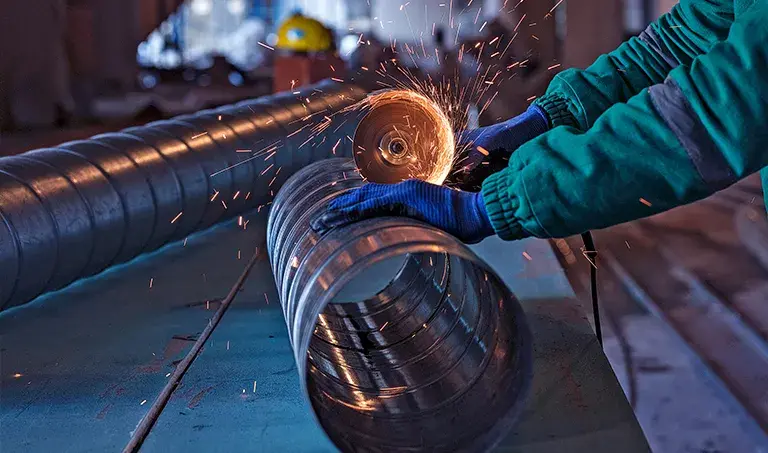
    A worker cuts a metal pipe with an angle grinder, sparks flying, showcasing precision in predictive maintenance for the steel industry.

    The steel industry plays an essential role in developing the economic standing of any country. Since steel is a necessary component for every primary sector, to keep the country’s economy in full bloom, steel factories need to ensure that all production processes are running smoothly, which can be hindered by unplanned downtime.

    Unexpected downtime can cost not just a lot of money and time for any steel plant but can also affect the production and growth of downstream industries dependent on steel production. Machine availability and reliability being the top concern in steel production, the cost of secondary damages of such breakdowns can be astronomical. This can significantly affect the quality, operational efficiency, loss of productivity, and increased risk of accidents on site. With such high stakes, using predictive maintenance to avoid unexpected downtime can be a gamechanger for steel plants.

    What are the Challenges in Steel Manufacturing Industry?

    PROCESS LEVEL CHALLENGES: Steelmaking involves many manufacturing techniques which are time-consuming and complex. Apart from primary production processes, there are many sub-processes where the intermediate products are reheated, solidified or pressed into various forms, like pipes, sheets, bars, rods, and different structural shapes based on the requirement.The primary steel manufacturing process is continuous and process-based, whereas the secondary manufacturing phases are discrete. What complicates it further is the fact that:

    • Production process parameters from the upstream steel manufacturing processes strongly influence the downstream ones.
    • The intermediate products in the process undergo both chemical and mechanical changes, making monitoring quality and output more difficult.

    PLANT LEVEL CHALLENGES:

    While steel manufacturing is already a complex process, steel plants may also face many on-ground challenges in maintaining efficiency, such as:

    • Older & legacy machinery
    • Frequent halts in production due to machine failure & downtime
    • Expensive coal & raw materials
    • Avoiding unexpected accidents on site
    • Various external factors like lockouts, strikes, inefficient administration, and shortage of raw materials


    Due to these challenges, steel plants face constant pressure to produce high-quality products in less time without any unexpected production halts. Unplanned downtimes can put the whole process on a stop, affect quality and production, and endanger the health and safety of workers on site.

    What is Predictive Maintenance?
    Predictive maintenance is the next level of condition-based maintenance that regularly monitors the operating condition and health of machines through edge computing. It helps predict asset issues before they occur, thus not disrupting the manufacturing workflow, reducing accidents, and improving the machine’s overall availability & reliability.
    The data from the edge computing systems continuously provide results in real-time to alert you of machine performances and machine breakdowns. It also alerts you of maintenance based on what machine data indicates, which helps to avoid any unexpected repair costs.

    Advantages of Predictive Maintenance for Steel plants

    Reducing downtime and Ensuring asset longevity & RUL:
    Failure of machines can be pretty stressful and is an added expense. Using predictive maintenance, you can predict issues ahead of time, reduce downtime of machines, increase uptime by 15-20%, schedule maintenance as and when required, and thus improve the lifeline of the old machine by up to 20%.

    Reducing maintenance costs
    Since all the machines in the steel manufacturing process are constantly monitored and fixed before the problem gets severe, maintenance and spare part costs are way lower than what they would be for reactive maintenance or preventative maintenance. There is also no need for unnecessary planned downtime.

    Improving Workplace safety
    Predictive maintenance can lower the risk of workplace accidents by flagging off any anomalies that can trigger off an accident on site. Predictive maintenance ensures a hygienic and healthy environment in the plant and reduces safety risks by up to 14%.

    Enhancing productivity
    By ensuring that both planned downtime & unplanned downtime are at their minimal, predictive maintenance ensures that there are fewer disruptions to production, improving the overall productivity drastically.

    How Does Infinite Uptime’s Predictive Maintenance as a Service Solution Work for Steel Industry?

    Infinite Uptime’s Predictive Maintenance as a Service uses real-time data to find out the status of the machine and the health of every rotating asset. The edge computing system is deployed to monitor all critical assets in every process and monitors parameters like vibration, temperature, etc. A machine health score is provided in real-time for every monitoring location. Anytime there is a dip between the prescribed machine score, an alert goes to the plant supervisor, along with a recommended remedial action suggested by our Predictive Maintenance as a Service solution. The machine status is further analyzed to ensure that the mitigated solution has improved the status quo.

    Customized dashboards for different levels like plant operator, manager, plant head, or manufacturing head (multi-plant) are created & made accessible for the team to ensure agile & proactive decision making to ensure the production continues smoothly.

    Conclusion

    The steel industry is the linchpin of global economic development. Any unplanned downtime or production stoppage can jeopardize the steel manufacturers and manufacturers of all the industries that rely on it.
    Predictive maintenance can be a value-added service for steel manufacturers. With the right steel plant predictive maintenance services on your side, you can avoid extra costs, reduce downtime, increase productivity, and focus your time and efforts on growing your business instead of worrying about unexpected downtimes or machine failures. Enhance your operations with proactive strategies to keep your steel plant running smoothly and efficiently, ensuring long-term success in a competitive market.Want to learn more about how we have helped large global steel manufacturers avoid downtime & improve factory performance? Click here to read a case study.

    FAQs


    What are the primary challenges faced by steel manufacturing industries?
    Steel plants encounter challenges such as aging machinery, frequent production halts due to breakdowns, high costs of raw materials, and the constant risk of accidents on-site. These factors contribute to operational inefficiencies and jeopardize production continuity.


    What is Predictive Maintenance, and how does it differ from traditional maintenance approaches?
    Predictive Maintenance involves real-time monitoring of machine health using edge computing and IoT sensors. It predicts potential issues before they occur, minimizing downtime and reducing maintenance costs compared to reactive or preventive maintenance.


    How does Predictive Maintenance improve safety in steel plants?
    By continuously monitoring machine conditions and detecting anomalies early, Predictive Maintenance helps mitigate safety risks and reduces the likelihood of workplace accidents by up to 14%, ensuring a safer working environment.


    What are the benefits of Predictive Maintenance for steel plants?
    Predictive Maintenance enhances asset longevity by up to 20% and increases overall equipment effectiveness (OEE) by minimizing downtime. It also lowers maintenance costs and improves productivity by preventing unplanned disruptions to production.


    How does Infinite Uptime’s Predictive Maintenance as a Service solution work in the steel industry?
    Infinite Uptime deploys edge computing to monitor critical assets in real-time, analyzing parameters like vibration and temperature to assign machine health scores. Alerts are sent to supervisors for prompt action, ensuring proactive maintenance and optimized production workflows.


    What role does data analytics play in Infinite Uptime’s Predictive Maintenance solution?

    Data analytics in Infinite Uptime’s solution enables comprehensive monitoring and analysis of machine performance trends. This data-driven approach supports informed decision-making at various management levels, from plant operators to manufacturing heads, fostering agile responses to maintenance needs.

  • Predictive Maintenance as a Service: A game-changer for Manufacturing.

    Predictive Maintenance as a Service: A game-changer for Manufacturing.

    Predictive Maintenance as a Service: A game-changer for Manufacturing

    A hand touches a glowing holographic wrench and screwdriver, symbolizing predictive maintenance for manufacturing.

    Manufacturing encompasses a diverse and wide array of processes, industries, and raw materials. Yet all manufacturers everywhere share a common enemy: Unplanned Downtime, which harms productivity, asset health, brand reputation & dotted line.

    Every year, top fortune 500 manufacturing enterprises lose almost 1 trillion to unplanned downtime, nearly 8% of their annual revenue. Here is how the introduction of Predictive Maintenance as a Service can be a gamechanger in the world of manufacturing & asset maintenance to curb unplanned downtime.

    But to understand why Predictive Maintenance as a service is so revolutionary, let’s understand how asset maintenance was performed until a few years ago:

    What are the types of Asset Maintenance practices in Manufacturing?

    Reactive Maintenance:

    Reactive Maintenance means letting your machines run unchecked till they fail. Maintenance here is post-failure, as a reactive approach after the anomaly. While it saves you unnecessary downtime & maintenance costs for parts that don’t require servicing, it also means you risk machine failure anytime by being blind about your machine health.

    Planned Maintenance or Preventive Maintenance:

    After the reactive maintenance approach resulted in constant fire-fighting for the plant manager, maintenance became a time-based activity, i.e., annual, bi-annual, based on their own and peer’s experiences. But often, it was noted that a planned downtime, although revealing nothing wrong with the asset, would still result in loss of productivity & profits. And sometimes, the machines would fail even before the planned period, so the problem persisted.
    With the failure of both of these approaches to curb machine failure and thereby unplanned downtime in time, the industry looked forward to solutions like IoT & AI to power up maintenance with real-time insights. And that is what predictive maintenance as a service is all about.

    Predictive Maintenance as a Service:

    Predictive Maintenance (PdM) relies on real-time monitoring of machine health using smart technologies like edge-computing, IIoT, data science, and analytics. Once an anomaly (w.r.t vibration, temperature, or acoustics) is detected, it is flagged off to the relevant plant supervisor for the next immediate action. A maintenance activity can thus be scheduled if something goes wrong while the maintenance expert can also decode the exact ‘something’. PdM enables the maintenance teams with necessary controls to extend equipment lifecycle, optimize the cost of maintenance, maximize machine uptime and amplify factory performance.

    What Industries can Predictive Maintenance as a Service make the most impact on?

    While any manufacturing plant- whether discrete or process-based can deliver a clear impact with Predictive Maintenance as a Service measures, the process-based manufacturing plants can truly thrive because of their unique workflow of interconnected processes.


    Since the output of the process manufacturing plant depends on the previous steps completed in tandem, the stoppage of even a single machine can halt the entire production process. This is where predictive maintenance as a service can help by ensuring that the machine health issues are taken care of before they become serious.

    Here are some examples of plants where Predictive Maintenance as a Service can save the day:

    • Cement plants
    • Steel plants
    • Metals & Mining
    • Oil & Gas Refineries
    • Power plants
    • Chemical plants
    • Pharmaceutical plants
    • Petrochemical plants

    How can Predictive Maintenance as a Service be a gamechanger for Manufacturing?

    Predictive Maintenance as a Service brings all the benefits of cutting-edge technology without the financial downside of capital intensiveness and sustainability. Here is how it can do magic for manufacturing plants:


    Asset health & performance:
    In an asset-intensive industry like manufacturing, where the equipment is costly and used to the extreme, equipment & component replacement costs are prohibitively high. You can boost asset life, RUL (Remaining Useful Life), and Machine Uptime & Reliability by tackling asset issues before they get serious.EHS & Compliance benefits:
    Manufacturing plants consist of the most demanding working environments with toxic gases, material, and dangerous machines working furiously. It is no wonder that the regulatory guidelines get stringent now and then. It is also a risky working environment for the operators and other employees. Predictive maintenance as a service policy ensures no untoward accidents or compliance issues. Read more on our ATEX Certification.OEE:
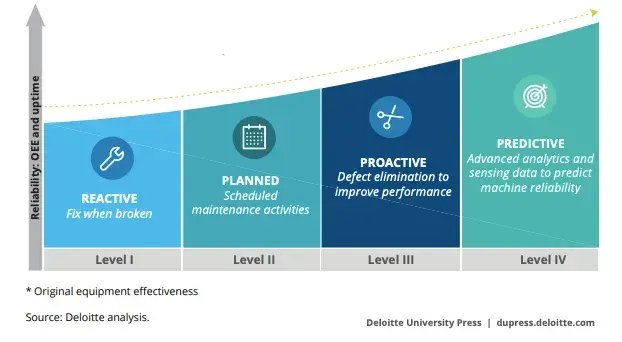
    Standing for Overall Equipment Effectiveness OEE is a globally prevalent metric that measures the productivity of a manufacturing asset. Calculated as a product of equipment availability, performance & quality of output produced, OEE is a benchmark for comparing the productivity of plants. The availability & performance of the machine depends on the maintenance & servicing when it is needed. According to a Deloitte study, a regular PM results in high OEE, Uptime & Reliability, compared to all types of maintenance. Infographic showing maintenance maturity levels from reactive to predictive, highlighting improved reliability and uptime across four stages. Quality & Brand reputation:
    Regular Asset maintenance and machine health analysis can ensure that the machine performs at the top of its capacity. This will provide a high quality of the overall output. A fully functional plant producing quality output with minimal disruptions will also ensure a good brand image & reputation in the ecosystem.Increased Employee Productivity:
    A well-functioning asset means that employees don’t have to fight fires caused due to last-minute machine failures. It also means quality and timely output, allowing them to be productive at what they do.

    What Infinite Uptime’s Predictive Maintenance as a Service brings to the table?

    The end-to-end Predictive Maintenance as a service by Infinite Uptime involves collecting data & computing the triaxial vibrations, temperature, and noise of the mechanical equipment in real-time via its patented edge computing system. The data is then monitored & analysed in real-time, and a machine health score is assigned. A machine with a lower health score is flagged to the plant supervisor or plant engineer with a diagnostic assessment score and the probable cause for the anomaly and a recommendation on improving the machine. This helps the maintenance teams to plan better and save critical downtime of machines which positively impacts the overall factory performance and productivity.

    AI for Predictive Maintenance in Manufacturing

    Artificial Intelligence (AI) has become the backbone of modern predictive maintenance in manufacturing by transforming raw machine data into actionable intelligence. By continuously analyzing real-time and historical data from sensors such as vibration, temperature, acoustics, and energy consumption AI models learn normal operating patterns of industrial assets and detect early-stage anomalies that traditional rule-based systems often miss. This allows manufacturers to predict failures well in advance, move away from time-based maintenance, and significantly reduce unplanned downtime across asset-intensive operations.

    Beyond prediction, AI enables prescriptive decision-making in manufacturing environments. Advanced algorithms estimate remaining useful life (RUL), identify root causes of degradation, and recommend the most effective maintenance actions with clear timelines and risk impact. This empowers maintenance and plant teams to plan interventions during scheduled shutdowns, optimize spare parts and labor, improve OEE, enhance safety and compliance, and extend equipment life making AI-driven predictive maintenance a true game-changer for manufacturing performance and reliability.

    Conclusion

    With real-time insights from interconnected assets being monitored and analysed instantly, predictive maintenance as a service provides massive power to the manufacturers without any drawbacks of a conventional maintenance solution. And that is when the true digital transformation will happen when data and insights combine to provide value.

    Infinite Uptime offers responsively designed machine diagnostics, remote condition monitoring, and predictive maintenance solutions in diverse industries such as Cement, Steel, Mining and Metals, Tire, Paper, Automotive, Chemicals, FMCG, Oil and Gas, and more. To understand how predictive maintenance applies to your process plant and can help in achieving plant reliability, explore the comprehensive solutions of Infinite Uptime.

    FAQs


    What is Predictive Maintenance as a Service (PdMaaS) in manufacturing?

    Predictive Maintenance as a Service leverages IoT, AI, and real-time data analytics to monitor machine health continuously. It predicts potential failures before they occur, allowing proactive maintenance to prevent unplanned downtime and optimize equipment performance.


    Which industries can benefit most from Predictive Maintenance as a Service?

    Industries such as cement, steel, metals & mining, oil & gas refineries, power plants, chemical plants, pharmaceutical plants, and petrochemical plants can benefit significantly. These industries rely heavily on continuous production processes where any downtime can impact productivity and profitability.


    What are the key differences between Predictive Maintenance as a Service (PdMaaS) and traditional maintenance approaches in manufacturing?

    Predictive Maintenance as a Service utilizes real-time data and advanced analytics to predict equipment failures before they occur, unlike reactive or planned maintenance methods that rely on scheduled or post-failure interventions.


    How does Predictive Maintenance as a Service improve manufacturing operations?

    PdMaaS enhances asset health and performance by identifying and addressing issues before they lead to failures. It increases equipment reliability, extends asset lifespan, improves overall equipment effectiveness (OEE), and ensures compliance with safety and environmental regulations.


    What benefits does Predictive Maintenance as a Service offer beyond traditional maintenance methods?

    Predictive Maintenance as a Service reduces operational costs associated with unplanned downtime and reactive maintenance. It enhances quality control, boosts brand reputation, increases employee productivity, and provides real-time insights for informed decision-making in manufacturing operations.

  • Predictive Maintenance as a Service for Cement Industry: An Overview

    Predictive Maintenance as a Service for Cement Industry: An Overview

    Predictive Maintenance as a Service for Cement Industry: An Overview


    The cement manufacturing industry is one of the oldest and most critical manufacturing industries for the global civilization. It has witnessed unparalleled growth at the heart of most economic developments and international growth this decade. Fortune Insights report says, the global cement market will grow from $326.80 billion in 2021 to $458.64 billion in 2028, a steep 5.1% globally. It is then no wonder that cement plants face pressure for process and asset maintenance.

    Cement Manufacturing Process & Need For Predictive Maintenance

    Cement manufacturing is a highly intricate continuous process involving multiple ingredients and steps. Here is an overview of the entire cement manufacturing process, highlighting the machinery used at each stage, with a focus on cement plant maintenance.

    The process begins with the blending of limestone and clay, which are the primary raw materials. This is followed by the production of cement in a kiln, where the raw materials are heated at high temperatures. Finally, the storage of clinker occurs, which is an intermediate product in the cement production process. Each of these stages requires specific machinery and careful maintenance to ensure efficiency and quality in cement production.

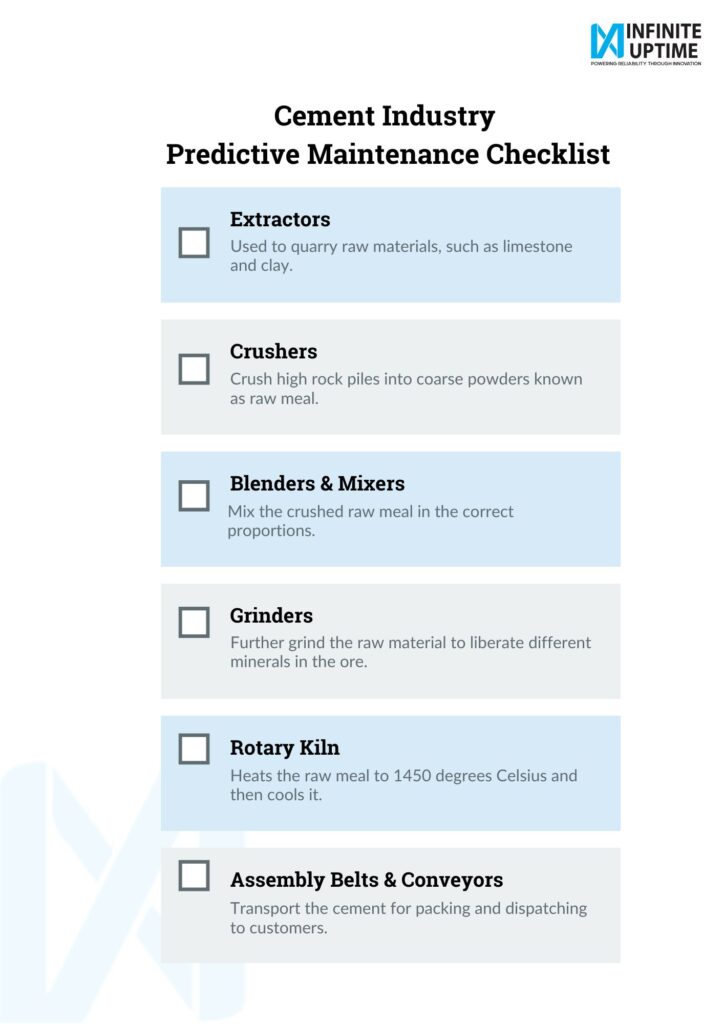
    Cement Industry Predictive Maintenance checklist:

    • Extractors: Used to quarry raw materials, such as limestone and clay.
    • Crushers: Crush high rock piles into coarse powders known as raw meal.
    • Blenders & Mixers: Mix the crushed raw meal in the correct proportions.
    • Grinders: Further grind the raw material to liberate different minerals in the ore.
    • Rotary Kiln: Heats the raw meal to 1450 degrees Celsius and then cools it.
    • Assembly Belts & Conveyors: Transport the cement for packing and dispatching to customers.

    These processes and machines must operate in tandem, without interruptions, to ensure a high-quality cement production process. Unplanned downtime in even one of these machines can severely impact efficiency and quality, as well as the health and safety of personnel on-site. Implementing predictive maintenance in cement plant maintenance can help mitigate these risks, ensuring continuous operation and optimal performance.

    Common causes for machine downtime in a cement plant

    • Loose nuts, bolts, springs, plates, spring rods, flywheel, bearings, shaft, coupling housing, hammer rotor
    • Motor failure, Conveyor belt, breakage, bearing failure, stretching rod breakage, breakage of separator blade
    • Fan bearing breakage, fan unbalance
    • Gear knocking, gear tooth wear, gear deformation, gear spitting and spalling
    • Axle spindle breakage, crusher bearings failure, slip tape breakage
    • Disc liner shift
    • Rolling mill cracks, tubing failure, pump failure, spoke breakage
    • Grate plate breakage

    Why asset maintenance in cement plants is a necessity?

    Asset maintenance in cement plants is critical for several reasons:

    • Extensive Repair & Replacement Costs: Proper maintenance helps avoid costly repairs and replacements.
    • Chances of Industrial Safety Hazards & Accidents: Regular maintenance reduces the risk of accidents, ensuring a safer working environment.
    • Over-Maintenance of Equipment: Excessive maintenance can lead to unnecessary wear and tear on machinery.
    • Harsh Operating Environment: Cement plants operate under challenging conditions, requiring robust maintenance practices.
    • Dynamic Environment: The nature of cement production necessitates proactive decision-making to adapt to changing conditions.
    • Enable Remote Monitoring & Control: Effective maintenance strategies, including predictive maintenance in cement plants, enhance agility and resilience.

    In summary, implementing effective cement plant maintenance practices not only mitigates risks but also optimizes operations, ensuring long-term sustainability and efficiency.

    How can Predictive Maintenance as a Service help?

    With the stakes so high and a constantly changing environment, real-time machine diagnostics are necessary to empower plant managers with the correct data. IIoT can enable this by enabling a 360-degree view of interconnected assets across the plant. Predictive maintenance as a service allows plant managers in cement managers to move away from reactive measures like reactive maintenance and preventive maintenance to a predictive one, where critical machines don’t have to be pulled down unless there is a specific anomaly.
    At a grassroots level, predictive maintenance as a service by IU for cement plants can be implemented by placing sensors at strategic positions on the machines. Vibration analysis of mechanical equipment components such as air compressors, belt drives, conveyors, fans, blowers, kiln rollers, motor bearings, and vertical and horizontal mills can help predict anomalies. This cost-effective approach to predictive maintenance in cement not only enhances cement plant maintenance but also minimizes unplanned downtime, ultimately improving operational efficiency and safety.
    The Predictive Maintenance as a service solution by Infinite Uptime involves collecting data, analysis & computing of the triaxial vibrations, temperature and noise of the mechanical equipment on edge at real-time via a patented edge computing system. The data then is monitored & analyzed in real-time, and a machine health score is assigned. A machine with a lower health score is flagged to the plant supervisor or plant engineer with a diagnostic assessment of the probable cause for the anomaly and a recommendation on improving the same. Not just that, if not considered severe yet, but still significant; the fault is continuously monitored, with relevant parameters like temperature, vibration etc., to assure that it does not aggravate the status quo. This information can be made available in real-time to the appropriate people at their fingertips. An access-based dashboard ensures that you get access to the most relevant machine data for the plant from single machine access for a plant operator to multiple machines across the plant access for a plant head and a multi-plant machine score for a manufacturing head. Let’s look at a case study around how we helped a top Indian cement manufacturer reduce 250 hours of downtime.

    Conclusion

    Today, the cement industry is on the cusp of digital transformation, fueled by rising demand and cut-throat competition and increasingly stringent regulations. The pressure on the cement industry’s assets, processes, and people to be on the top of their game has never been higher. In such a scenario, Predictive Maintenance as a Service for your cement plant can help avoid machine failures and the associated unplanned downtime and the quality of the output cement and the OEE (Overall Equipment Effectiveness) of the cement plants. It improves machine availability and performance, also saving costs for repairs & spare parts. But most importantly, it arms you with resilience & agility during unpredictable times via remote monitoring and proactive maintenance when needed the most.

    FAQs


    What is Predictive Maintenance as a Service (PdMaaS) for the cement industry?
    Predictive Maintenance as a Service uses IIoT and sensor data to predict machinery failures before they occur, enabling proactive maintenance strategies in cement plants. This approach minimizes downtime and improves overall equipment effectiveness (OEE).


    Why is asset maintenance crucial in cement plants?
    Asset maintenance in cement plants is critical due to the high costs associated with downtime and repairs, the harsh operating environment, and the potential safety hazards. Proactive maintenance strategies like PdMaaS help mitigate these risks


    How does Predictive Maintenance as a Service work in cement plants?
    PdMaaS involves placing sensors on critical machinery to monitor parameters like vibration, temperature, and noise in real-time. This data is analyzed using edge computing to assess machine health and predict potential failures, allowing for timely interventions.


    What are the common techniques used in machine diagnostics?
    Common techniques include vibration analysis, oil analysis, electrical analysis, ultrasonic analysis, and infrared thermography. These methods help in detecting anomalies such as vibrations, contamination levels, electrical irregularities, and temperature changes, which are indicative of potential machine faults.

  • Complying with ATEX standards in hazardous environments. Why does it matter?

    Complying with ATEX standards in hazardous environments. Why does it matter?

    Complying with ATEX standards in hazardous environments. Why does it matter?

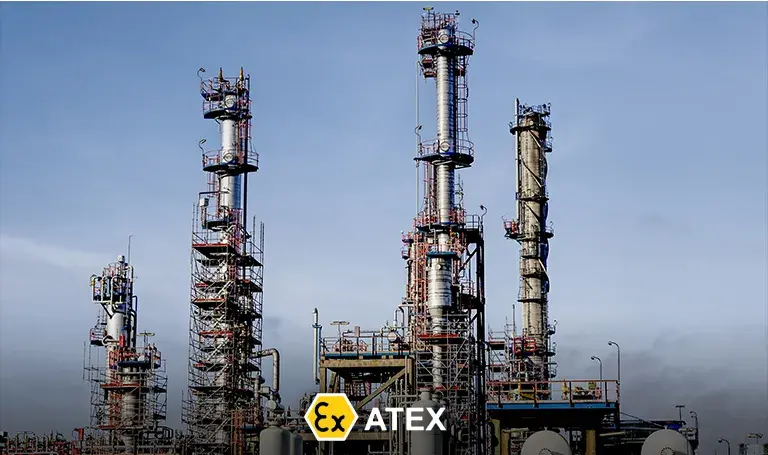
    Industrial facility infrastructure: a chemical or oil refinery plant highlighting equipment safety compliance with ATEX certification.

    Manufacturing facilities are no less than war zones – they have difficult workplace conditions like explosive atmosphere, flammable & toxic gasses and combustible substances. A few more hazardous than others are like Oil & Gas, Petrochemical, Chemical plants & Power plants. Such a high-risk workplace environment is safeguarded by mandatory health & safety risk assessments, certifications, safety gear, rules & regulations. It ranges from what kind of devices can be used on-site to the gear worn by the workers.

    An ATEX certification for your equipment can be a gamechanger. This article tried to address the most common questions around ATEX certification.

    What is an ATEX Certification?

    ATEX stands for ATmosphere EXplosible.

    It certifies equipment & protective systems intended for use in potentially explosive atmospheres. It categorizes equipment based on its protection against turning into an active ignition source. Here are the two European Directives for certifying equipment that is declared ‘intrinsically safe’ in the explosive atmospheres:

    • Directive 1999/92/EC (also called ‘ATEX 153’ or the ‘ATEX Workplace Directive’)
    • Directive 2014/34/EU (also called ‘ATEX 114’ or ‘the ATEX Equipment Directive)

    The ATEX 2014/34/EU is the new accepted safety standard for testing & certifying equipment intended to be utilized in potentially explosive environments in the EU, post a 2015 Legislative change.
    The ATEX certification covers explosions from flammable gas/vapours and combustible dust/fibres (which can also lead to explosions)

    Here are how zones for flammable gas/vapour (a potentially explosive atmosphere consisting of air with a mix of toxic substances in the form of mist/vapour/gas) are classified for ATEX certification:

    • Zone 0 – A place where a potentially explosive atmosphere is present continuously or for long periods.
    • Zone 1 – An area in which a potentially explosive atmosphere is likely to occur occasionally.
    • Zone 2 – A place where a potentially explosive atmosphere is not expected to occur usually, but if it does happen, it will persist for a short period only.

    A rear view of a technician wearing a blue uniform and an orange hard hat, looking at the complex metal blades of a large industrial turbine. The image includes a blue banner at the bottom with the white text: "Click to view" and "ATEX Certification of vEdge Sensor."

    Identifying an ATEX certified Equipment

    If equipment has an official ATEX certification, it has been completely certified to be safe for being used in hazardous/explosive atmospheres. ATEX approved equipment can be identified by the official ‘Ex’ logo shown in the image above.

    Any equipment without Atex certification must not be brought onto site in manufacturing facilities with an explosive atmosphere to prevent any probability of disasters.

    Why is ATEX Certification challenging to achieve?

    For a product to be ATEX certified, it must undergo rigorous tests quality checks for weeks & even months in various test conditions. Even after the certification is processed, quality assurance, compliance checks, and audits are conducted to ensure that the product complies with the stringent benchmarks.

    Once the certification is provided to a product, even a tiny tweak or alteration to the product in any form can render the certification null & void.

    Is an ATEX Certification applicable across the globe?

    Although initially constituted by the European Union for its member states, the ATEX certification is slowly gaining global acceptance as a preferred standard for accepted devices in potentially explosive atmospheres. OEMs with ATEX Certifications now find interested buyers even outside the EU, and it is predicted that it may one day become the globally accepted standard.

    Conclusion

    If you are looking for equipment to be used in a plant with a potentially explosive environment like the industries mentioned above, then looking up an ATEX certification first will go a long way in finding reliable equipment.

    At Infinite Uptime, we very well understand the importance of HSE initiatives in manufacturing and how every small bit of diligence is critical to ensuring a risk-free environment & safety of the workers. To this end, we are delighted to share that vEdge, our edge computing technology that enables our Diagnostics Service, has received a Zone 0 ATEX Certification from the International Centre for Quality Certification (ICQC LLC), Latvia. Here is the ATEX-Certification for our vEdge. Want to know more about how vEdge can propel digital reliability even in the most difficult environments?

    Reach out to our team at contact@infinite-uptime.com

    FAQs


    What is ATEX certification?

    ATEX certification verifies that equipment and protective systems are safe to use in potentially explosive atmospheres, ensuring they do not ignite the surrounding gases or dust.


    Why is ATEX certification important in manufacturing facilities?

    ATEX certification is crucial in industries like Oil & Gas, Petrochemicals, and Power Plants to mitigate the risk of explosions caused by flammable gases or combustible dust. It ensures compliance with safety standards and protects workers and assets.


    How can equipment with ATEX certification be identified?

    Equipment with ATEX certification displays an official ‘Ex’ logo, indicating it has undergone rigorous testing and meets safety requirements for use in explosive environments.


    Is ATEX certification recognized globally?

    While initially an EU standard, ATEX certification is increasingly recognized globally as a benchmark for safe equipment in explosive atmospheres. Manufacturers with ATEX certification can market their products internationally, enhancing safety standards worldwide.

  • Impact of Industrial Analytics in Fostering Manufacturing Transformation

    Impact of Industrial Analytics in Fostering Manufacturing Transformation

    Impact of Industrial Analytics in Fostering Manufacturing Transformation

    Engineer in hard hat and glasses monitors industrial analytics on a laptop, with robotic arms operating in the background.

    If data is oil, manufacturing is the brightest lamp powered from it. Manufacturing is expected to generate 1812 Petabytes (PB) of data every year, a lot more than BFSI, healthcare & many other industries, according to Deloitte. Industrial Analytics today are helping optimize every facet of manufacturing by enabling proactive decision making & automation across organizations through the access of the right data to the right people on time.

    What does Industrial Analytics exactly do?

    Industrial Analytics Definition:

    Industrial Analytics collects, analyses, and uses data generated in industrial operations through machines, processes, and people.

    Traditionally Manufacturers have always been using data to improve their efficiency & machine health for years. But what has changed now with technologies like IoT is how the data is captured. In the past, data collection was done manually, with plant operators recording data or feeding it in a machine. But these approaches are flawed- they are time-consuming and prone to human errors and biases. This data is still grassroots and not actionable for decision-making, particularly at a senior level. With digital transformation, tons of strategically placed sensors capture every critical machine data, recorded and analyzed in real-time. The level of insights that emerge is actionable for every level.

    Here is how industrial analytics is transforming various use cases in manufacturing, improving the efficiency and productivity of machines, processes & people:

    Improving Manufacturing Supply Chain

    In a hyperconnected world, manufacturing processes and supply chains are getting increasingly extensive and complicated. Industrial Analytics enable manufacturers to hone in on every stage of the manufacturing process and study supply chains in minute detail, accounting for individual activities and tasks. Based on machine health, inventory status, forecasting of orders, preparation, and choice of suppliers can be made in advance.

    In the current scenario of a dynamically changing environment, a resilient supply chain can make or break your enterprise.

    IReduce Downtime

    Manufacturers can extend the life of critical assets by using data to predict when they will fail. Predictive maintenance systems today collect past data to produce insights that aren’t visible using traditional methods. For example, companies may utilize industrial analytics to identify the conditions that may cause a machine to malfunction and monitor input parameters to act before the equipment breaks or be prepared to replace it when it does, reducing downtime. Factors like Misaligned shafts, lubricant oil contamination and excessive vibrations can result in unplanned downtime if not controlled in time. Technologies like Infinite Uptime’s IDAP can allow plant managers to track these in real-time and predict anomalies with a prescribed solution, effectively minimizing planned and unplanned downtime.

    Since machine downtime can cause a loss of around $260,000 an hour per hour for a manufacturing company, this is one of the most critical use cases for industrial analytics.

    Productivity & Production process improvement

    Improved workforce productivity and processes can be measured, monitored and optimized with suitable parameters via industrial analytics. With the efficiency of machines and processes in place, operator efficiency performance can be mapped to benchmarks to identify techniques that cause a decrease in operator performance at various stages of production.
    On the other hand, Manufacturers can detect bottlenecks and inefficient processes and components that are causing them. Industrial analytics also reveals interdependence between different processes and their outputs, allowing producers to consider each process separately, improve manufacturing processes, and devise predictive maintenance procedures to address any stumbling blocks.

    Drive machine OEE improvement

    OEE improvement is a crucial metric for shopfloor performance. With effective Manufacturing analytics in place, components like asset utilization, efficiency, product quality rating and runtime for every machine can be tracked. This information in real-time can enable manufacturers to figure out the machines causing the bottlenecks in reaching the planned OEE. Mapping these key performance metrics at a plant level can help top-level decision-makers to make changes at an asset and process level to take the OEE to the planned level.

    For the plant head & manufacturing head for multiple plants, it is easy to track performance vis-a-vis assets and entire plants to find what is performing well and what can be improved.

    Reduce Manufacturing Errors

    Industrial analytics can assist in reducing errors in manufacturing processes, operators and machines, improving the quality of the output.

    For example, a perfectly aligned machine can perform at its best, producing quality output. Infinite Uptime’s IDAP helps ensure the machine is correctly aligned at all times and functioning at its optimal capacity.

    With predictive & prescriptive industrial analytics, any potential downstream quality or equipment issues can be detected. Corrective action can be taken to salvage the quality, and in the case of discrete manufacturing, an intermediate product can be discarded to save further losses.

    Conclusion

    Industrial Analytics can thus be the key to unlocking hidden potential and business value in various parts of your manufacturing process.
    At Infinite Uptime, we are dedicated to revolutionizing industrial operations through our Predictive Maintenance as a Service. Our real-time condition monitoring, combined with advanced fault detection and fault diagnosis, leverages AI-powered insights to ensure your equipment runs smoothly, minimizing unexpected downtime across various industries. By adopting our service, businesses can achieve unparalleled reliability and efficiency, transforming their maintenance strategies from reactive to proactive. Experience the difference with Infinite Uptime and let us help you enhance performance and operational excellence in your industry.

    Want to realize the potential of your manufacturing data? Reach out to us at contact@infinite-uptime.com to set up a call with our team of experts.

    FAQs


    What is industrial analytics?
    Industrial analytics involves collecting, analyzing, and utilizing data from machines, processes, and people in industrial operations to optimize efficiency and decision-making.


    How does industrial analytics improve manufacturing supply chains?
    Industrial analytics enables manufacturers to analyze and optimize supply chains by monitoring machine health, inventory status, and forecasting, allowing for proactive decision-making and preparation.


    What is the importance of predictive maintenance in manufacturing?
    Predictive maintenance using industrial analytics helps extend the life of critical assets by predicting potential failures based on data insights, thereby reducing downtime and operational costs significantly.


    How does industrial analytics contribute to improving productivity in manufacturing?
    Industrial analytics monitors and optimizes workforce productivity and production processes by identifying inefficiencies, detecting bottlenecks, and improving overall operational efficiency and output quality.


    What role does industrial analytics play in reducing manufacturing errors?
    Industrial analytics helps reduce errors by monitoring machine alignment, performance parameters, and quality metrics in real-time, allowing manufacturers to take corrective actions promptly and improve product quality.

  • Top Manufacturing Trends of 2022

    Top Manufacturing Trends of 2022

    Top Manufacturing Trends of 2022

    Workers in helmets and protective gear operate heavy machinery in a steel plant, showcasing 2022’s top manufacturing trends

    The last two years have been nothing less than a vigorous shake-up to manufacturing. From kickstarting an industry-wide awakening to digital transformation and remote operations for a decade, manufacturing has seen nothing less than a paradigm shift. It has also brought the spotlight on the criticality of this sector for the global economy & those who work tirelessly day & night in factories.

    In 2022, we expect all of these trends to rise. In the past two years, the challenges experienced in industrial operations have led to a complete introspection of the entire manufacturing operations cycle, including supply chain management & asset maintenance. The results gradually create a need for a fundamental change to protect the bottom line while staying agile & resilient to any future challenges.

    Here are some top trends for Manufacturing in 2022:

    1. The Remote Monitoring shift:
    It’s not that remote monitoring has not existed for Manufacturing, but it was the choice of a few digitally aware pioneers. But intermittent surges of the pandemic, with its restrictions of social distancing, workforce shortages, and government regulations, have made remote monitoring mandatory for Manufacturing. The hybrid or remote working setup is not a temporary shift anymore.
    With remote work becoming the new normal, investing in technologies like IoT that make remote monitoring happen is now essential for digital reliability & empowering your maintenance team to stay prepared for all circumstances. A platform like Infinite Uptime’s Industrial Data Enabler (IDE), a patented edge-computing Vibration monitoring system, can point out any anomalies in the machines long before they become critical. Accessing the correct data to the relevant people in real-time is no less than a game-changer. Here is how remote monitoring can help your facilities.2. Connected Supply Chains:
    Supply chains were hit in the worst way due to the globe-wide nature of the pandemic. Unpredictable & sudden shortages globally, coupled with lockdowns, made inventory management very difficult. While businesses are trying to make their supply chains agile & localized, digital technologies like AI, ML & IoT are helping solve this via connected supply chains. Here are two ways how they can help:

    • By solutions that can predict the inventory needs in advance and enable real-time tracking of shipments, optimizing delivery timings
    • An intelligent Predictive Maintenance solution that ensures a consistent & reliable asset performance can predict the flow of raw materials products from supplier & the end product to the customers due to fewer breakdowns or disruptions.

    3. Skill gap & rise of Prescriptive Analytics:
    With increasing competition & economic growth, shortage of skilled workforce is one of the biggest challenges for manufacturers globally. In addition to this, the retirement of baby boomers with years of information & tribal knowledge without a proper knowledge transfer can lead to huge errors on the shop floor. That is why today, your digital reliability system needs to be prescriptive, not just predictive. Not only does the anomaly in the machine need to be predicted, but a recommendation based on past data also needs to be suggested to the plant operator. Only then can manufacturing analytics become truly actionable in time.

    4. Sustainability beyond compliance:


    With the rise in global initiatives around climate change and sustainability, every industry has been experiencing the impact. Manufacturing has not been any different. Sustainability for Manufacturing comes in various forms- for operations, energy footprint, water and packaging to reduce waste and carbon emissions. For the first two, reliable assets are the key. A well-functioning asset that is always available & performing well will not result in higher energy overheads. On top of this, sudden malfunctions or stoppages without an established protocol in the case of industries like chemicals, oil & gas, etc., can result in harmful emissions in the atmosphere.

    Conclusion

    The past two years have reiterated the importance of a data-driven approach coupled with automation and the importance of a healthy energy footprint, workers and machines. 2022 will see manufacturers globally investing in these trends and using innovative technologies to bridge the gap between today’s setup and industry 4.0.

    About Infinite Uptime

    Infinite Uptime is transforming the industrial health diagnostics space with a Digital First approach. We provide comprehensive solutions around Machine Diagnostics, Predictive Maintenance and Condition Monitoring to the top engineering and process industries globally. We promise to deliver maximum Machine Uptime, minimize Factory Disruption and elevate Equipment Reliability for a stellar factory performance.Infinite Uptime leverages IoT, machine learning, artificial intelligence, smart communications, cloud computing, analytics and data science techniques to accelerate digital adoption and turn Industry 4.0 into a business reality. To know more about us and our customer success stories, please visit www.infinite-uptime.com or write to contact@infinite-uptime.com.

    FAQs


    What is machine diagnostics in manufacturing?

    Machine diagnostics in manufacturing refers to the process of monitoring and analyzing machine conditions to detect faults or potential breakdowns. It involves collecting data through techniques like vibration analysis or spectral analysis to pinpoint the root cause of issues affecting machine health.


    How does machine diagnostics benefit manufacturing industries?

    Machine diagnostics helps manufacturing industries by minimizing downtime through early fault detection and predictive maintenance. By identifying issues before they escalate, maintenance teams can plan proactive repairs, thereby optimizing asset performance and reducing operational costs.


    What is remote monitoring ?

    Remote monitoring involves continuously monitoring machine conditions in real time using IoT-enabled technologies. It allows maintenance teams to access data from anywhere, facilitating proactive maintenance decisions based on real-time insights. Remote monitoring enhances the effectiveness of machine diagnostics by ensuring comprehensive and continuous visibility of asset health.


    What are the common techniques used in machine diagnostics?

    Common techniques include vibration analysis, oil analysis, electrical analysis, ultrasonic analysis, and infrared thermography. These methods help in detecting anomalies such as vibrations, contamination levels, electrical irregularities, and temperature changes, which are indicative of potential machine faults.


    What are the benefits of remote condition monitoring in manufacturing?

    Remote condition monitoring offers benefits such as enhanced safety for maintenance teams, as potential hazards can be identified remotely. It also supports cost-efficient operations by enabling predictive maintenance strategies based on real-time data, thereby improving overall plant reliability and reducing unplanned downtime.


    How can machine diagnostics and remote monitoring improve asset performance?

    By continuously monitoring machine health and diagnosing faults early, these technologies help in maintaining optimal asset performance. Predictive maintenance driven by machine diagnostics and remote monitoring ensures that maintenance activities are proactive rather than reactive, leading to improved operational efficiency and extended equipment lifespan.


    What industries can benefit from machine diagnostics and remote monitoring solutions?

    Industries such as Cement, Steel, Mining and Metals, Tire, Paper, Automotive, Chemicals, FMCG, Oil and Gas, among others, can benefit significantly from these solutions. The ability to monitor critical equipment remotely and predictively address maintenance needs is crucial for enhancing productivity and reliability across diverse industrial sectors.


    What are the key features of Infinite Uptime’s machine diagnostics and remote monitoring solutions?

    Key features include real-time data accessibility, predictive analytical insights, and responsive design tailored to meet the specific needs of process plants. Infinite Uptime’s solutions enable seamless integration of machine diagnostics and remote monitoring into existing operational frameworks, ensuring continuous improvement in asset performance and reliability.