IIoT-based predictive maintenance – A mission critical need for manufacturing
Industry 4.0 continues to gain momentum across every industrial and manufacturing segment. This revolution is built upon three primary technologies: Big Data, Edge Computing and the Internet of Things (IoT). As the adoption of IoT devices continues to grow, many organizations are switching to edge technology because of its advantages over legacy cloud solutions. One of the key advantages of edge computing is real-time predictive maintenance. In a predictive analytics solution, Artificial Intelligence (AI) is combined with Business Intelligence (BI) to monitor the operating condition and predict when to perform maintenance on that asset.
What is Predictive Analytics?
Predictive analytics uses statistical algorithms and advanced analytics combined with AI techniques to predict future outcomes based on historical and current data patterns. Organizations use this method to benefit possible future events by using predictive modelling to take maintenance decisions before a disruptive event. This technique imports data from the targeted asset synthesizes it and combines it with different data sources. Once a large amount of data is cleaned, the data analysis is initiated to recognize patterns and trends. In simple words, using Artificial Intelligence and Machine Learning technique, a machine can predict future events.
What is Predictive Maintenance?
A subset of predictive analytics, predictive maintenance is the process of utilizing data analysis to predict future outcomes. This technique is used to recognize potential faults in machines and processes. Manufacturing and service industries need to improve the performance of their assets. As per the report by a leading publication, spending on IoT-enabled predictive maintenance will reach 12.9 billion by 2022 compared to $3.4 billion in 2018.
Benefits of Predictive Maintenance:
An AI-enabled predictive maintenance solution comes with numerous competitive advantages as compared to legacy maintenance processes.
1. Improved Machine Lifespan:
By identifying problems, machines can be serviced even before the problem occurs. Also, with a constant study of the machine, the AI solution prevents any significant damage from occurring, consequently improving the overall health of connected equipment and uptime its average lifespan.
2. Increased Production:
With the ability to constantly monitor a machine’s performance, one can avoid unscheduled downtimes and improve operations throughput. This not only improves the machine’s health but also enhances the quality of the production.
3. Minimize Maintenance Costs:
With the help of IoT sensors, it becomes easy to detect anomalies and repair them before the problem becomes irreversible. This minimizes the chance of operational setbacks due to unplanned machine downtime. A report by McKinsey suggests that a predictive maintenance application can minimize maintenance costs by 25%. On the other hand, Deloitte believes it can reduce machine breakdowns by 70%.
4. Reduction in Downtime:
A predictive maintenance solution can cause approximately a 45% reduction in downtime. The analytics provide insight on faults and require repairs so you can schedule them accordingly. This helps companies to effectively optimize their resource schedules or schedule maintenance outside of operation hours.
5. Improved Benefits:
The data collected from the IoT-based solution helps businesses make practical and calculative decisions regarding machine management. This can improve manufacturing value by enhancing the overall equipment effectiveness and the production volume. This can also decrease replacement or repair costs. Businesses are leveraging IoT-based predictive maintenance to improve value and minimize costs.
The Future of Predictive Maintenance
Although cloud computing can support predictive analytics systems, organizations gain a crucial advantage by refining data analytics and processing speed and performance through edge computing. A predictive maintenance solution performed at the edge minimizes data storage costs along with real-time analytics and low latency. IoT devices and sensors gather data frequently, meaning these IoT-enabled solutions work with enormous data.
When we implement such solutions through cloud computing, vast data gets shared over the network to the cloud. While the load on the internet continues to grow, the cost of networking will increase as well. Predictive maintenance solutions, run on the edge analyze the data on-premise in real-time to minimize the amount of data shared on the cloud, saving businesses money on cloud storage costs.
About Infinite Uptime
Infinite Uptime is transforming the industrial health diagnostics space with a Digital First approach. We provide comprehensive solutions around Machine Diagnostics, Predictive Maintenance and Condition Monitoring to the top engineering and process industries globally. We promise to deliver maximum Machine Uptime, minimize Factory Disruption and elevate Equipment Reliability for a stellar factory performance.
Infinite Uptime leverages IoT, machine learning, artificial intelligence, smart communications, cloud computing, analytics and data science techniques to accelerate digital adoption and turn Industry 4.0 into a business reality. To know more about us and our customer success stories, please visit www.infinite-uptime.com or write to contact@infinite-uptime.com.
Predictive analytics involves using statistical algorithms, AI techniques, and advanced analytics to forecast future outcomes based on historical and current data patterns. It helps organizations anticipate future events and make proactive decisions, such as scheduling maintenance before issues arise.
Predictive maintenance is a specific application of predictive analytics focused on predicting potential faults in machinery and processes. It uses data analysis to foresee maintenance needs and prevent equipment failures, whereas predictive analytics encompasses a broader range of applications beyond maintenance.
Predictive maintenance offers several advantages, including improved machine lifespan, increased production by avoiding unscheduled downtimes, minimized maintenance costs, reduced downtime, and enhanced overall equipment effectiveness. It helps optimize resource scheduling and reduce operational setbacks.
Edge computing is preferred for predictive maintenance because it allows for real-time data analysis on-premise, reducing latency and data storage costs. Unlike cloud computing, which involves transmitting large amounts of data over the network, edge computing minimizes data sharing and associated costs, making it more efficient for handling extensive IoT data.
Infinite Uptime enhances predictive maintenance with a Digital First approach, offering solutions in machine diagnostics, condition monitoring, and predictive maintenance. By leveraging IoT, AI, and machine learning, Infinite Uptime helps industries achieve maximum machine uptime, reduced factory disruptions, and improved equipment reliability.
Digital Transformation – The Future of Predictive Maintenance
Digital Transformation or digitization is no longer just a hype or a concept. It has found a pertinent place in every facet of business and companies who want to build futuristic business model. The advent of these disruptive technologies is proving to be a game-changer and driving a digital revolution in the industrial and manufacturing space. Conventional manufacturing industries are rapidly transforming into digitally connected enterprises by adding OT (Operations Technology) & IT (Information Technology) muscle to their production processes, manufacturing capabilities and maintenance programs.
In simple words, mechanical data and insights generated by applying these technologies are helping industrial setups to control cost, improve speed to market, drive critical decisions, add customer-centricity, and create competitive advantages.
Challenges in the mining Applying Digital Transformation as a Service (DTaaS) in manufacturing industry
Predictive Maintenance (PdM) and Condition Monitoring (CM) are the most sought-after and top opportunities in the industrial ecosystem from a return-on-investment standpoint. Digital transformation in PdM & CM is the application of advanced computing technologies to enhance the overall machine efficiency, reliability, outcome and sustainability in manufacturing operations. It combines a collaborative approach of man-machine-technology ecosystem along with all its service components.
Benefits of DTaaS in Predictive Maintenance and Condition Monitoring
DTaaS provides reliability-engineering teams with a plethora of new tools & approaches to effective machine maintenance and opportunities to accelerate transformation and revenue growth for the top stakeholders. Here are some direct benefits of converting the data & insights from a digital system to operational performance:
Save 30-50% or more on maintenance cost
Increase machine uptime significantly
Improve visibility in maintenance programs and manufacturing processes with accurate machine data
Build a connected enterprise with a man-machine-technology ecosystem
Create a digital drive in your enterprise to achieve Industry 4.0 objectives
DTaaS influences multiple aspects of the industry irrespective of the business competency, production facility and promotes coherent integration with hardware and modern technology such as IoT, Artificial Intelligence, Machine Learning, Cloud Computing, etc. The cost-effective yet endless services signify improving existing processes, nurturing ideas, over-ruling cultural barriers, and providing a generic interface with the professionals.
The emerging service model enriches customer experiences and focuses on customer connectedness. The excellence of the services is directly related to data collection, vibration monitoring, predictive analytics, visualization and reporting. Developing a strong bond with the customer at a functional and business level to promote an adaptive and data-guided mindset encourages better alignment of the available infrastructure and resources.
Begin your Digital Transformation journey with Infinite Uptime
DTaaS resolves the complexity of Digital Transformation that depends on IT integrations, extraordinary consultations, considerable upfront costs, and the relative value-addition at different stages. 95% of industry experts agree that DTaaS in manufacturing is essential to create a broader business impact and create a deeper business relationship. Infinite Uptime has been extending its DTaaS services with Diagnostics to all the engineering and manufacturing industries.
The services comprise of monitoring, collecting and analysing mechanical (machine or equipment) data using a patented technology called, vEdge, an Industrial Data Enabler (IDE) and Industrial Data Analytics Platform (IDAP). This empowers the maintenance authorities, CBM experts and maintenance heads to perform in-depth analysis and diagnoses the root cause of discrepancies in the machine.
These real-time machine health diagnostics solutions enabled with connectivity, communication, machine analytics, insights and reporting are driving innovation in manufacturing. Industrial IOT, AI, ML, Cloud and data analytics is rapidly accelerating strategic C-Suite objectives like Smart Manufacturing, Industry 4.0 Transformation and creating a Digitally Connected Enterprise.
Looking for expert guidance on how you can start your digital transformation journey or worried whether this will benefit your business?
Write to us at contact@infinite-uptime.com and we will ensure you get answers to all your questions.
What is Digital Transformation as a Service (DTaaS) in manufacturing?
DTaaS integrates advanced computing technologies like IoT, AI, and cloud computing to enhance machine efficiency, reliability, and sustainability in manufacturing operations. It transforms traditional industries into digitally connected enterprises, optimizing maintenance programs and driving competitive advantages.
How does DTaaS benefit predictive maintenance and condition monitoring?
DTaaS enables reliability-engineering teams to save significantly on maintenance costs (up to 30-50%), increase machine uptime, and improve visibility into maintenance and manufacturing processes through accurate machine data. It fosters a connected ecosystem of man, machine, and technology, aligning with Industry 4.0 objectives.
What technologies are integrated into DTaaS to drive digital transformation?
DTaaS leverages IoT, Artificial Intelligence (AI), Machine Learning (ML), Cloud Computing, and advanced data analytics to enhance operational performance, optimize maintenance strategies, and facilitate predictive analytics for proactive decision-making in manufacturing.
How does DTaaS support Industry 4.0 transformation in manufacturing?
DTaaS accelerates Industry 4.0 objectives by enabling smart manufacturing through real-time machine health diagnostics, predictive analytics, and seamless integration of hardware and digital technologies. It promotes a data-driven mindset and enhances business agility and customer connectedness.
Why is DTaaS considered essential for manufacturing industries?
DTaaS resolves complexities associated with digital transformation by offering cost-effective solutions, real-time insights, and strategic guidance. It supports broader business impacts, strengthens customer relationships, and drives innovation across engineering and manufacturing sectors.
What is Predictive Maintenance (PdM) and how does it differ from Preventive Maintenance? Discover how Predictive Maintenance works!
Asset maintenance in discreet and process manufacturing is a key priority – one that can have a multiplying effect on plant reliability and bottom line. For industries where even a single hour of production downtime due to asset unavailability can translate into millions of dollars of losses, strategic investments are made to make maintenance more effective. Maintenance management has thus, evolved into a complex field with application of varied digital and analytics solutions to improve efficacy while reducing costs.
Predictive maintenance is a result of this pragmatic evolution and has helped manufacturers save billions of dollars through increased Remaining Useful Life (RUL) of assets and minimized production downtime. By 2025, the predictive maintenance market is expected to grow to USD 25 billion, creating unparalleled value across global industrial value-chains. This article will cover what predictive maintenance is, how it has evolved to suit industry needs, and how it applies in various manufacturing setups.
What is Predictive Maintenance(PdM)?
Predictive maintenance (PdM) is a maintenance approach which entails use of cloud-enabled technologies to monitor diverse assets involved in production and estimate the maintenance needs on the basis of asset condition and detected anomalies. Condition Based Monitoring (CBM) is the underlying concept, which is used to monitor industrial assets in real time. Technologies such as infrared thermography, vibration analysis, oil analysis, and acoustic monitoring are deployed to collect equipment condition data.
The data thus collected is analysed to detect any deviation in asset performance or irregularities which are otherwise impossible to detect without sophisticated equipment. But predictive maintenance doesn’t just stop at detection of performance issues. With the help of edge diagnostics and predictive analytics, the underlying causes behind poor asset performance are determined. Predictive maintenance solutions can also forecast the time when a monitored equipment will breakdown, if corrective maintenance measures are not taken.
Historically, industrial maintenance has evolved from being reactive to predictive.
This evolution has been driven by an increased focus on Overall Equipment Effectiveness (OEE) and the need to reduce unplanned production downtime. While manufacturing plants no longer rely on a reactive maintenance approach, preventive or scheduled maintenance is the most popular among undigitized setups. Since a preventive approach can deliver 50%-75% OEE on an average, maintenance leaders hesitate to shift away from it towards a predictive maintenance approach. However, understanding the key differences between both practices can help.
How is Predictive Maintenance Different from Preventive Maintenance?
Preventive Maintenance
Preventive maintenance is essentially a periodic and schedule-based maintenance approach that uses asset performance history and routine equipment inspections to plan maintenance events.
Irrespective of the machine condition and the remaining useful life of the asset, maintenance and replacement activity is performed.
Preventive maintenance is usually labour-intensive and not very cost-efficient. Maintenance teams have to maintain inventory of equipment spare parts and schedule planned downtimes to execute maintenance.
The net cost of asset is increased as over the period of its usage, several parts are replaced and consumables are used to keep the asset running optimally.
Latent problems that may develop in-between inspection schedules could go un-noticed and remain un-addressed. As a result, the dependence on reactive maintenance increases.
Predictive Maintenance
Predictive maintenance relies on continual monitoring of equipment condition through sophisticated technologies that are IoT-enabled.
Maintenance activity is highly targeted in predictive maintenance and only performed when a fault or anomaly is detected. Routinely organized production downtimes and pre-emptive part replacements are not required.
PdM is increasingly efficient over time and reduces the labour-intensive nature of maintenance activities. Predictive maintenance is also more cost-efficient, reducing the inventory carrying burden for spare parts.
Net cost of assets is effectively reduced as the complete useful life of every machine is utilized before any replacement is done.
The likelihood of unplanned reactive maintenance is reduced by 70-90% with a predictive approach. Since equipment faults are diagnosed well before the actual functional failure, organized maintenance events can help avoid process disruption and reactive efforts.
Critical equipment problems and underlying causes of diminishing productivity can be accurately identified with predictive maintenance. As a result, a higher network system reliability can be achieved in a cost-efficient manner.
To better understand how both the approaches can have a distinctive impact on the maintenance organization, here’s an example. A single high-pressure roller press can support the production of a 2MTPA cement grinding plant. If it breaks down due to undetected anomalies or fault in its planetary gearbox, it can result in a potential downtime of 24-48 hours. Now, preventive maintenance measures allow plant maintenance staff to schedule regular asset maintenance events, irrespective of the machine condition and abnormalities which may be affecting productivity.
On the other hand, with a predictive maintenance approach, not only can such anomalies be detected in advance, but such critical events can also be avoided with prescriptive measures. (Read the full case here.)
How does Predictive Maintenance Work?
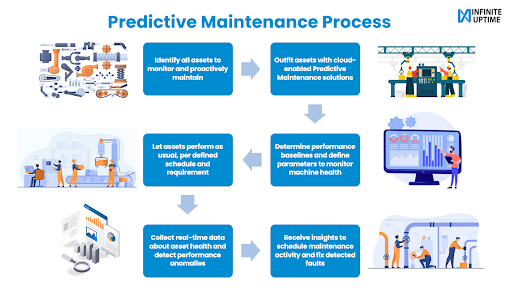
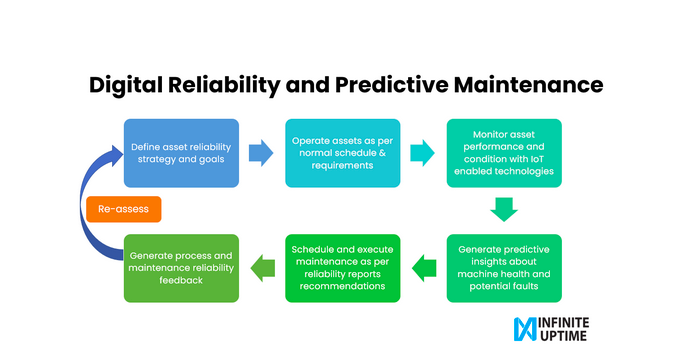
While predictive maintenance is applicable for both discreet and process manufacturing setups, its adoption must follow a strategic workflow. The following process or workflow can help manufacturing maintenance teams effectively harness the advantages of predictive maintenance:
To begin with, all assets available in a production environment must be evaluated to determine how mission critical they are and whether they should be proactively maintained. Once the appropriate machine groups are identified, they can then be outfitted with the cloud-enabled predictive maintenance solutions. These solutions could offer edge-diagnostics with the help of vibration analysis and condition monitoring, but before fault diagnosis can happen, it is important to define performance parameters for assets being monitored.
These performance parameters can include baseline metrics which would be considered as the norm, and continual monitoring would not lead to unnecessary false positive notifications. The assets can then be allowed to operate as per their pre-defined schedule and requirement. Meanwhile, real-time performance data and machine health indicators can be collected and stored on cloud. Advanced predictive analytics can diagnose data anomalies and generate insights regarding potential faults in the monitored assets.
These insights can empower maintenance teams to schedule maintenance activities with minimal production downtime and costs.
Conclusion
In sum, predictive maintenance as a service has evolved with the core objective of making industrial asset management more efficient and less costly. Data accessibility and intelligent analytics have shaped the service into a powerful enabler that allows maintenance and operations teams drive plant reliability objectives. While predictive maintenance adoption has to be strategic and supported by change management, its benefits are quickly felt and undeniable for even the most complex production units.
Plant Energy Optimization also plays a crucial role by maximizing output while minimizing energy consumption, cost, and environmental impact across key manufacturing processes.
For manufacturers in the United States, where energy costs, reliability expectations, and sustainability goals are especially high, these improvements make a meaningful difference to day-to-day operations and long-term performance.
Infinite Uptime offers responsively designed predictive maintenance solutions in diverse industries such as Cement, Steel, Mining and Metals, Tire, Paper, Automotive, Chemicals, FMCG, Oil and Gas, and more. To understand how predictive maintenance applies to your process plant, explore the digital reliability [PS1] and asset management solutions of Infinite Uptime.
Predictive maintenance utilizes IoT-enabled technologies to monitor equipment condition in real-time, allowing maintenance teams to detect potential issues before they cause failures. This proactive approach aims to maximize asset lifespan and minimize unplanned downtime, improving overall operational efficiency and reducing maintenance costs.
Preventive maintenance is a scheduled approach where equipment is serviced at fixed time intervals. It does not depend on the actual condition of the machine or whether a fault is developing. The goal is to reduce unexpected breakdowns by performing routine inspections and part replacements.
Predictive maintenance has evolved from reactive and preventive maintenance approaches to a data-driven strategy that uses advanced analytics and real-time monitoring. It enables maintenance teams to predict equipment failures, optimize maintenance schedules, and enhance plant reliability in manufacturing environments.
Adopting predictive maintenance reduces unplanned downtime by 70-90%, lowers maintenance costs, extends equipment lifespan by maximizing its useful life, and improves overall production efficiency. It also enables more informed decision-making and reduces reliance on reactive maintenance practices.
Predictive maintenance differs from preventive maintenance by monitoring equipment condition in real-time and performing maintenance only when necessary based on data-driven insights. Unlike preventive maintenance, which relies on scheduled intervals, predictive maintenance minimizes unnecessary maintenance activities and optimizes resource utilization.
Manufacturing industries manage complex production environments where even a single hour of downtime caused by unreliable or unavailable assets can cost the manufacturer millions. Not to mention, there are added risks of hazardous leaks, life-endangering accidents, and a complete breakdown of the value chain. One of the reasons behind the uptake of Industry 4.0 technologies and systematic digital transformation is the need to overcome this inherent uncertainty in discreet and process plants.
Intelligent automation and advanced analytics can enable operation and maintenance teams to improve asset availability in their plants. Furthermore, mission-critical assets can be made more reliable, helping plant teams achieve intended targets and objectives. This is why there’s an increasing shift in focus toward digital plant reliability and manufacturing leaders are prioritizing the adoption of technologies that can drive these objectives.
This article will cover what digital reliability is, what are its benefits, and which technologies are driving digital reliability in manufacturing industries.
What is Digital Reliability?
Reliability is the probability of a system meeting certain pre-defined performance standards and delivering desired output for an intended period of time. A reliable system continues to perform within specific parameters, without experiencing any anomalies or breakdowns and operates at optimum productivity level. Digital reliability is ensuring asset and plant reliability through smart digitalization of processes and increased data availability to support decision-making.
Contemporary digital reliability solutions rely on real-time condition monitoring of manufacturing equipment, performing predictive analytics on collected data, and mapping the machine performance to generate a realistic health status of the asset. Data irregularities are investigated to diagnose existing or potential faults, and take corrective measures to mitigate the risk of failure.
Take a steel manufacturing plant, for instance, where a cold rolling mill is critical equipment that controls the production flow and throughput quality. The asset is responsible for achieving greater dimensional accuracy and increasing the hardness of the final product. If a cold rolling mill is available but not functioning under optimal conditions, then potential breakdown can lead to several hours of production downtime. With digital reliability measures, this eventuality can be avoided and the cold rolling mill can become highly reliable, saving over 72 hours of production downtime. (Read the full case here.)
Benefits of Digital Reliability
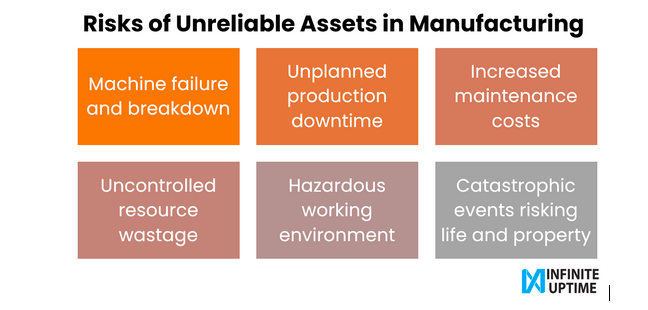
Digital reliability is becoming increasingly important in production environments as a lack of data-backed insights on machine health can diminish plant reliability, often resulting in:
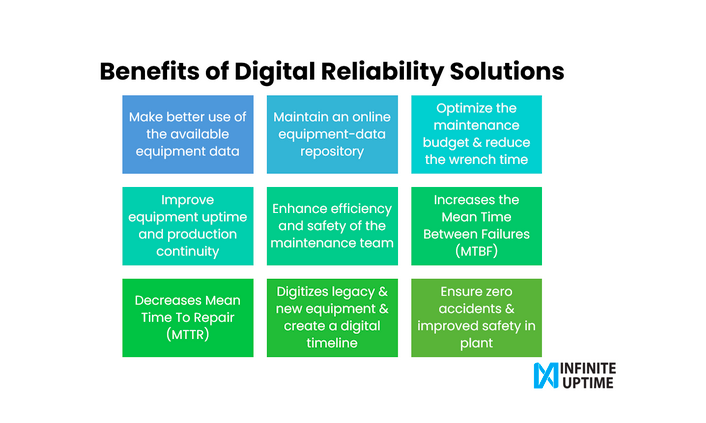
With responsively designed and implemented Digital Reliability solutions, these risks can be successfully mitigated. Plant maintenance and operation teams can intelligently put available equipment data to use and plan maintenance events to drive net productivity. The following benefits can be achieved with digital reliability in manufacturing setups:
Predictive Maintenance for Digital Reliability
More than 70% of equipment breakdown is due to mechanical faults, including equipment wear, deterioration, backlash, increase in clearances, vibrations, and acoustics. While for hydraulics, thermal and electrical faults, standard monitoring solutions are available, for mechanical faults, monitoring becomes challenging. To drive digital reliability objectives in these scenarios, predictive maintenance becomes an important enabler.
With Predictive Maintenance (PdM), plant maintenance teams can estimate the exact remaining useful life (RUL) of the equipment perform accurate diagnostics, and receive insightful recommendations to strategically plan maintenance activities. Real-time monitoring of triaxial vibrations, acoustics, and surface temperature is utilized to generate digital reliability reports and guide maintenance schedules. Responsive predictive maintenance solutions can also:
Adapt to special production conditions
Diagnose high-frequency data
Accurately decipher the signal from noise
Overcome complex bandwidth limitations
Collect and store multi-location data on-cloud
A predictive maintenance approach integrates naturally with the digital reliability objectives of any manufacturing setup. The monitoring objectives can be driven by digital reliability goals, and the final outcome of Predictive Maintenance activities can result in a feedback loop to refine and improve the digital reliability strategy.
Conclusion:
In sum, digital reliability ensures that all available assets in a production environment perform reliably as per pre-defined standards and metrics. With cloud-enabled predictive maintenance technologies, sophisticated digital reliability solutions can be tailored to suit the specific needs of a manufacturing unit. Continuous asset monitoring, and data-backed decision-making for the maintenance and operational activities, strategically drive digital reliability and create more productive and secure production environments.
Infinite Uptime offers responsively designed predictive maintenance solutions in diverse industries such as Cement, Steel, Mining and Metals, Tire, Paper, Automotive, Chemicals, FMCG, Oil and Gas, and more. To understand how predictive maintenance applies to your process plant and can help in driving digital reliability, explore the asset maintenance and reliability solutions of Infinite Uptime.
What is digital reliability?
Digital reliability ensures consistent performance of manufacturing assets through advanced digital processes and real-time data analytics, minimizing downtime and maximizing productivity.
How does predictive maintenance contribute to digital reliability?
Predictive maintenance uses real-time data analytics to monitor equipment conditions, predict potential failures, and schedule proactive maintenance, thereby enhancing overall plant reliability and performance.
What are the benefits of implementing digital reliability solutions?
Implementing digital reliability solutions improves equipment reliability, reduces downtime, enhances safety, optimizes maintenance costs, and increases overall productivity in manufacturing environments.
Understanding Asset Optimization and Asset Monitoring in Manufacturing
Last updated on OCT 20, 2026
Mission-critical assets in manufacturing setups can make or break an entire value chain. An unmitigated asset breakdown or productivity decline can halt production for hours, or even days, resulting in huge revenue losses and unsafe work environments. The situation becomes even more complex for industries with distributed assets.To maintain assets in optimal condition and run the production process without disruptions, dedicated maintenance teams have to be deployed in various locations. Furthermore, investments are required in carrying spare-parts inventory and establishing strategic service contracts with Original Equipment Manufacturers (OEMs). While conventionally, these practices have been considered inevitable, a marked shift is happening towards predictive analytics and responsive maintenance solutions that can optimize asset performance.
This article explains what asset optimization means in a manufacturing environment, why it is critical for U.S. industrial operations, and how predictive maintenance solutions help maintenance and operations teams improve reliability, reduce downtime, and maximize asset performance.
What is Asset Optimization?
Optimization essentially means making something as effective, functional, reliable, and productive as possible. Asset optimization means optimizing the way that an asset is utilized and deriving maximum value from it. It also entails driving efficiency and reliability objectives by improving the Remaining Useful Life (RUL) of an asset and enhancing the Overall Equipment Effectiveness (OEE).Asset Optimization depends on leveraging data-driven intelligence and predictive analytics to achieve business objectives and add to the bottom line. IoT-enabled technologies can be deployed to monitor asset conditions and analyze real-time data to determine maintenance needs.
What is Asset Monitoring?
Asset Monitoring is the continuous process of tracking the health, condition, performance, and operational behavior of industrial equipment in real time. It involves collecting data from critical assets such as motors, pumps, compressors, gearboxes, conveyors, kilns, fans, turbines, and other rotating equipment using Industrial IoT (IIoT) sensors and condition monitoring technologies.
The primary objective of asset monitoring is to identify early signs of equipment degradation, performance abnormalities, or operational inefficiencies before they result in failures, production losses, or safety risks.
Modern industrial asset monitoring systems use technologies such as:
Vibration monitoring
Temperature monitoring
Acoustic analysis
Thermography
Oil analysis
Power and energy monitoring
Edge diagnostics and AI-based analytics
These technologies provide maintenance and operations teams with continuous visibility into machine health and asset performance across the plant.
What is real-time asset monitoring?
Real-time asset monitoring is the continuous tracking of industrial equipment health, performance, and operating conditions using IoT sensors, AI analytics, and condition monitoring systems to detect issues early, reduce downtime, and improve asset reliability.
What is Asset Performance Optimization?
Asset performance optimization uses real-time data and predictive analytics to improve equipment reliability, maximize productivity, reduce downtime, and lower maintenance costs in industrial plants.
What is Industrial Asset Monitoring?
Industrial asset monitoring continuously tracks the health and performance of industrial equipment using sensors and data analytics to detect early signs of faults and prevent unexpected breakdowns.
How Asset Monitoring Works ?
Asset monitoring works by continuously collecting operational and condition-based data from industrial equipment through connected sensors and monitoring devices.
The collected data is transmitted to centralized Industrial IoT (IIoT) platforms or cloud-based monitoring systems where advanced analytics, machine learning models, and predictive algorithms analyze asset behavior in real time.
The system identifies deviations from normal operating conditions such as:
Excessive vibration
Rising temperature trends
Misalignment
Bearing wear
Lubrication issues
Energy inefficiencies
Mechanical looseness
Imbalance and resonance
Once abnormalities are detected, automated alerts and predictive insights are generated for maintenance teams. This enables organizations to take corrective actions before failures occur, helping plants avoid unplanned downtime and costly emergency repairs.
How asset monitoring improves operational efficiency.
Asset monitoring improves operational efficiency by continuously tracking equipment health and performance in real time. It helps manufacturers detect issues early, reduce unplanned downtime, optimize maintenance schedules, improve asset reliability, increase production uptime, and lower operating costs through data-driven decision-making.
Benefits of Asset Monitoring
Implementing asset monitoring in manufacturing environments provides several operational and business benefits:
Early Fault Detection
Continuous monitoring helps identify equipment issues at an early stage before they develop into critical failures.
Reduced Unplanned Downtime
Maintenance teams can proactively address issues during planned shutdowns instead of reacting to unexpected breakdowns.
Improved Asset Reliability
Real-time machine health visibility improves equipment reliability and operational stability.
Asset monitoring identifies inefficient operating conditions that increase energy consumption and operational costs.
Enhanced Safety
Predicting failures early reduces hazardous maintenance situations and improves workplace safety.
Benefits of Asset Optimization
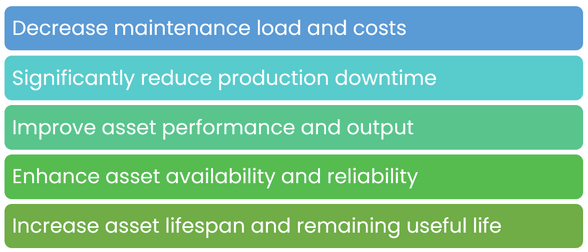
Optimal asset performance and availability have a dramatic effect on the overall productivity and throughput of a production plant. When assets are operating in optimal conditions, the following benefits are derived in discreet and process manufacturing industries:
Key benefits of asset optimization include:
Reduced unplanned downtime through condition-based maintenance
Lower maintenance and spare-parts costs
Improved asset performance and higher Overall Equipment Effectiveness (OEE)
Increased equipment reliability and operational stability
Extended asset lifespan by preventing premature wear and failure
In addition to these, safer and accident-free production environments can be created, with reduced risk of catastrophic events that could cost life and property. An indirect, yet palpable effect is also observed on revenue, margins, customer satisfaction, Return On Assets (ROA), and Work-In-Progress (WIP) inventory.
Challenges in Asset Optimization
Despite the incredible benefits that asset optimization offers, it is quite challenging to manage asset performance towards optimization. Major roadblocks in asset optimization are:
Maintenance frequency: When manufacturing plants adopt breakdown maintenance (till failure) or scheduled (preventive) maintenance strategies, asset conditions often remain less than optimal. Either maintenance is performed when an asset breaks down or is performed periodically, irrespective of what the asset condition is. In both scenarios, it is impossible to extract the maximum use of an asset.
Lack of data: Real-time information about asset conditions is rarely available, especially if manufacturing plants rely on offline asset inspections. Even when regular equipment inspections are performed manually, gaps remain in the data and many alarming signs about deteriorating equipment conditions may go unnoticed.
Costly unplanned maintenance: For industries with distributed assets, unplanned maintenance in the event of machine breakdown proves to be very costly. A larger maintenance team needs to be maintained to cover the geographic distribution of assets. Spare parts and sub-assemblies need to be sourced at higher prices to fulfill urgent requirements. Not to mention, on-floor conditions are highly unsafe and hazardous for maintenance workers.
Poor flow of information: Offline machine inspections and decentralized maintenance events create silos of information within the manufacturing organization. Critical information about asset conditions is not shared in real-time with all concerned stakeholders, and maintenance teams operate independently as per their capabilities.
Ineffective utilization of resources: Both human and physical resources are utilized with limited visibility of the machine health and asset availability. Thus, maintenance activities are organized even when they are not needed and machine parts are replaced before their useful life is over.
Not only does it make the total cost of assets and maintenance higher, but it also creates a system acceptance of inefficient asset management practices. Planned downtimes become the norm and plant teams become resistant to change. Without a decided shift in the approach for asset performance management, asset optimization can be very difficult to achieve.
What is KPI in indusrtial asset Optimization?
evaluate how effectively physical assets are performing, maintained, and utilized to achieve maximum productivity, reliability, and cost efficiency. In manufacturing and process industries, KPIs help plant leaders and maintenance teams assess whether assets are operating at optimal conditions while supporting business goals such as higher throughput, lower downtime, and improved safety.
Common KPIs used in industrial asset optimization include:
Overall Equipment Effectiveness (OEE) – measures availability, performance, and quality of assets
Asset Availability – percentage of time equipment is ready for production
Mean Time Between Failures (MTBF) – evaluates asset reliability
Mean Time to Repair (MTTR) – measures maintenance efficiency
Maintenance Cost per Unit or Asset – assesses cost efficiency
Remaining Useful Life (RUL) – predicts how long an asset can operate reliably
By tracking these KPIs, industrial organizations can identify performance gaps, prioritize maintenance actions, and apply predictive and prescriptive strategies to keep assets running at peak efficiency. This data-driven approach enables better utilization of existing assets, reduces operational risk, and improves overall Return on Assets (ROA) without additional capital investment.
Asset Optimization through Predictive Maintenance
Predictive Maintenance solutions can help plant maintenance teams overcome the various challenges in asset performance management and ensure asset optimization across the plant. With a predictive approach, maintenance teams monitor asset conditions remotely with the help of cloud-enabled technologies. Vibration analysis, acoustics, thermography, oil analysis, and other remote condition monitoring techniques are deployed to track asset conditions while they operate as per schedule.
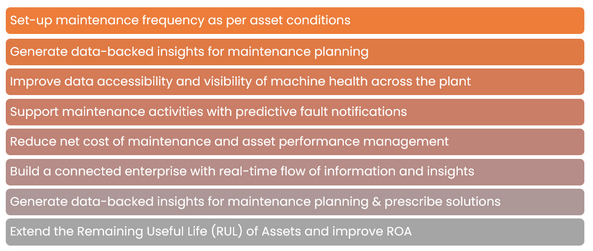
The machine health data is centrally collected and analyzed with the help of Industrial IoT (IIoT) technologies and accessible through responsive dashboards to concerned stakeholders. Since maintenance has to be strategized based on predictive insights, edge diagnostics, and advanced analytics are used to determine which asset is performing non-optimally and in need of attention. Such a focused approach to asset performance management has several benefits:
Example of Industrial Asset Optimization in Practice
Consider a cement manufacturing plant operating multiple rotary kilns, ID fans, gearboxes, and conveyors—all mission-critical assets running 24/7.
Before Asset Optimization
Maintenance is largely preventive or breakdown-based
Kiln ID fan bearings fail unexpectedly every few months
Each failure causes 8–12 hours of unplanned downtime
Emergency spares are air-freighted at high cost
Energy consumption gradually increases, but the root cause is unclear
Maintenance teams react after problems occur, increasing safety risk
Despite regular maintenance, assets rarely operate at peak efficiency.
After Asset Optimization Using Predictive & Prescriptive Insights
The plant deploys condition monitoring and predictive analytics across critical assets.
Vibration and energy data reveal early bearing degradation in the ID fan weeks before failure
Predictive analytics estimate Remaining Useful Life (RUL) of the bearing
Maintenance is scheduled during a planned shutdown, avoiding production loss
Prescriptive insights recommend alignment correction to prevent repeat failures
Energy consumption drops as the fan returns to optimal operating condition
Spare parts inventory is optimized based on actual asset health
Measurable Outcomes
Unplanned downtime reduced by 30–40%
Maintenance costs lowered due to fewer emergency repairs
Asset lifespan extended by preventing secondary damage
OEE improves through higher availability and stable performance
Energy per ton of cement reduced, improving margins
Safer working conditions with fewer emergency interventions
A Practical Asset Optimization Checklist for Manufacturing
Asset optimization is not about fixing machines faster—it’s about ensuring assets operate reliably, efficiently, and predictably throughout their lifecycle. Below is a concise checklist that industrial teams can apply to drive real, measurable results.
1. Focus on Critical Assets
Identify equipment that has the highest impact on production, safety, energy use, and revenue. Start optimization where failures hurt the most.
2. Measure What Matters
Track core KPIs such as OEE, availability, MTBF, MTTR, unplanned downtime, and energy consumption to establish a clear performance baseline.
3. Monitor Asset Health Continuously
Track core KPIs such as OEE, availability, MTBF, MTTR, unplanned downtime, and energy consumption to establish a clear performance baseline.
4. Shift to Predictive Maintenance
Anticipate failures instead of reacting to them. Predictive maintenance allows issues to be addressed during planned stoppages—reducing downtime, cost, and risk.
5. Plan Maintenance Using Data
Base maintenance decisions on actual asset condition, not fixed schedules. Replace parts only when needed and optimize spare inventory.
6. Review and Improve Regularly
Conduct periodic reviews to validate results, refine strategies, and align maintenance actions with reliability and business goals.
Asset optimization succeeds when data drives decisions, failures are predicted early, and maintenance becomes proactive. Plants that follow this disciplined approach achieve higher reliability, lower costs, and better return on assets.
How Asset Monitoring Connects with Asset Optimization
Asset Monitoring is one of the foundational pillars of Asset Optimization.Asset optimization depends on accurate, real-time visibility into equipment health, reliability, performance, and operational efficiency. Without continuous monitoring, manufacturing plants operate reactively with limited understanding of asset conditions.Asset monitoring provides the critical data needed to optimize:
Asset utilization
Maintenance scheduling
Spare-parts planning
Energy efficiency
Remaining Useful Life (RUL)
Overall Equipment Effectiveness (OEE)
By continuously monitoring machine conditions and analyzing operational patterns, organizations can shift from reactive and preventive maintenance toward predictive and prescriptive maintenance strategies.This data-driven approach enables plants to:
Improve production reliability
Reduce operational risk
Increase throughput
Optimize maintenance resources
Improve Return on Assets (ROA)
Maximize long-term asset performance
In modern manufacturing environments, effective asset optimization is nearly impossible without intelligent asset monitoring systems powered by Industrial IoT and predictive analytics.
Conclusion
In sum, asset optimization ensures that all available assets are utilized optimally in a manufacturing environment. By tracking asset conditions in real-time and performing predictive analytics, maintenance activities can be scheduled to optimize asset performance. Improved flow of information within the manufacturing organization and data-backed planning of asset maintenance can improve net return on assets (ROA) and overall plant productivity.
In addition, Plant Energy Optimization helps manufacturers reduce energy waste and operating costs, while Prescriptive Maintenance provides clear, actionable recommendations to prevent failures before they happen—making asset performance even more reliable and efficient.
Infinite Uptime offers responsively designed predictive maintenance solutions in diverse industries such as Cement, Steel, Mining and Metals, Tire, Paper, Automotive, Chemicals, FMCG, Oil and Gas, and more. To understand how predictive maintenance applies to your process plant and can help in optimizing asset performance, explore the plant reliability solutions of Infinite Uptime.
Asset optimization is the process of maximizing the performance, reliability, and useful life of equipment in an industrial plant by using real-time data, analytics, and targeted maintenance. It ensures that every asset operates at peak efficiency with minimal downtime. By improving visibility into machine health, asset optimization reduces operating costs, increases throughput, and supports safer, more reliable plant operations.
Asset optimization in manufacturing involves maximizing the efficiency, reliability, and productivity of critical assets to enhance overall operational performance and profitability.
Optimal asset performance reduces downtime, improves throughput, ensures safer working environments, and enhances profitability by maximizing asset lifespan and efficiency.
Challenges include ineffective maintenance strategies, lack of real-time data, costly unplanned maintenance, poor information flow among teams, and inefficient resource utilization.
Predictive maintenance uses IoT and advanced analytics to monitor asset conditions in real-time, enabling proactive maintenance planning and optimization of asset performance across manufacturing plants.
Asset optimization improves Return on Assets (ROA) by increasing asset availability, utilization, and lifespan while simultaneously reducing maintenance and operating costs. When assets are optimized, manufacturers produce more output from the same asset base without proportional increases in capital expenditure.
Understanding Machine Diagnostics, Remote Monitoring and Condition-Based Monitoring
Managing machine health and ensuring sustainable asset performance is an important control objective in manufacturing environments. In both discreet and process-based manufacturing industries, net plant productivity, operational costs, and return on assets (ROA) depend on how well the available assets are utilized. This makes monitoring and diagnosing faults in all available assets a high priority for maintenance teams.
This article will cover what machine diagnostics are and how remote monitoring enables maintenance teams to track machine conditions, detect existing or impending faults, isolate the root cause, and initiate procedures to restore machine health.
What is Machine Diagnostic?
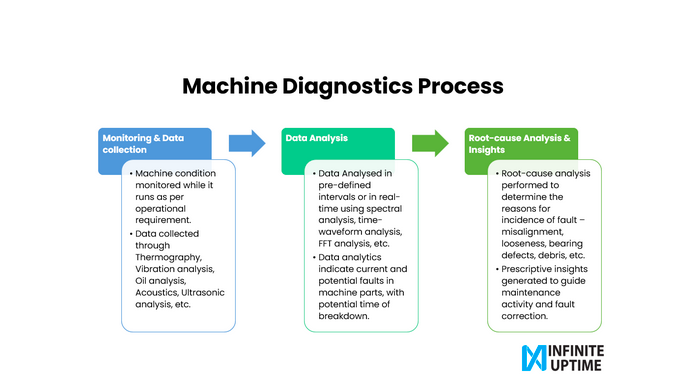
Machine diagnostics is an equipment control measure that focuses on tracking machine conditions and detecting faults that can lead to machine breakdown. The process includes fault detection, followed by root cause analysis. Machine diagnostics is critical in rotating machinery that operates round-the-clock and is essential for undisrupted production in a manufacturing environment.
Diagnostic data is collected with the help of various offline and online techniques, depending upon the scope of the maintenance. This data is then analyzed using methods like high-resolution spectral analysis, wavelet analysis or transform, Fast Fourier Transform (FFT), Wigner-Ville Distribution, waveform analysis, etc. The analyzed data is used to determine the root cause of faults and recommend corrective actions to the maintenance and operation teams.
For instance, a boom conveyor in a steel manufacturing plant can break down due to faults in motors, pulleys, or gearboxes. In a complex machine like this, it is difficult to determine what could have caused the breakdown and what kind of maintenance activity is required. With machine diagnostics, tri-axial vibration trends of the boom conveyor can be monitored to determine the root cause of machine breakdown.
If the machine’s health is deteriorating due to misalignment or bearing defects in the gearbox, then data-backed maintenance action can be carried out to restore machine function.
What is Remote Monitoring?
To make machine diagnostics efficient and empower maintenance teams with real-time data, machine health can’t be measured manually at sporadic intervals. There needs to be a system of continuous monitoring with complete data accessibility across the connected enterprise. This is achievable through remote monitoring of plant assets, using IoT-enabled technologies.
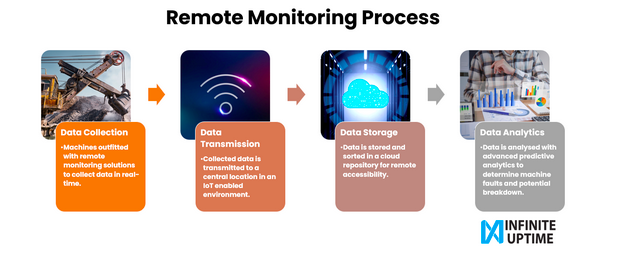
Remote monitoring deploys one or multiple cloud-enabled solutions to remotely monitor machine conditions. Machine vibration data is collected in real time and relayed via the cloud to a centralized repository. Any anomalies in the machine vibrations are analyzed and compared with pre-defined specifications to determine whether a fault exists or building up within the equipment. The maintenance teams can get complete visibility of machine health from any time, anywhere; facilitating a planned shift to the predictive maintenance approach.
Remote monitoring services also help create safer working conditions for maintenance and production teams. Potentially hazardous conditions can be detected from a safe distance, without any manual intervention on the site. At the same time, all maintenance-related decisions can be guided by data-backed insights, leaving very little to chance.
Remote Condition Monitoring for Machine Diagnostics
The most preferred method of remote monitoring is Condition Based Monitoring (CBM) in manufacturing industries. Condition monitoring is a non-destructive and non-disruptive technique of monitoring plant equipment to determine its health or condition at any point in time. Remote condition monitoring determines the stability or possible deterioration of equipment condition. The rate of deterioration and where exactly is the equipment in its life cycle are also determined and conveyed to concerned stakeholders.
Commonly used condition monitoring techniques in manufacturing industries are:
Vibration Analysis: Measuring vibrations within a component, machinery, or machine group.
Oil Analysis: Analysing oil contamination, and machine wear to determine asset health.
Electrical Analysis: Analysing incoming power quality from the equipment, using motor current readings.
Ultrasonic Analysis: Detecting high-frequency sound waves through ultrasonic analysis.
Infrared Thermography: Detecting radiations and temperature changes using a thermal imager.
Of all these, vibration analysis is best suited for rotating equipment in process-based manufacturing environments. Abnormal machine vibrations are used to generate displacement, velocity, and acceleration maps, which in turn help in diagnosing the underlying causes of faults in the machine. Predictive analytical insights can be generated from this exercise which can support maintenance teams in planning focused repair and replacement events.
What Is Remote Monitoring and Diagnostics in Industrial Operations?
Remote Monitoring and Diagnostics (RMD) is a technology that helps industrial plants monitor machine health and identify potential problems remotely using sensors, connected systems, and data analytics. It tracks important parameters such as vibration, temperature, and pressure to detect abnormal machine behavior and diagnose faults before they lead to equipment failure. This helps maintenance teams reduce unplanned downtime, improve equipment reliability, plan maintenance more effectively, and keep production running smoothly.
What is Condition-Based Monitoring (CBM)?
Condition-Based Monitoring (CBM) is a maintenance approach that continuously tracks the health of equipment using real-time data such as vibration, temperature, pressure, and energy consumption. Instead of relying on fixed schedules or reacting to failures, CBM detects early signs of degradation so teams can intervene at the right time.
By identifying abnormal behavior before breakdowns occur, condition-based monitoring helps reduce unplanned downtime, extend asset life, and lower maintenance and energy costs. It forms a critical foundation for predictive and prescriptive maintenance strategies in modern industrial plants.
Key Benefits of Condition-Based Monitoring in Industrial Plants
Extended equipment life: Minimizes wear by addressing problems before they cause serious damage.
Improved energy efficiency: Detects inefficiencies (e.g., motors drawing excess power) that increase energy use.
Better maintenance planning: Enables planned interventions aligned with production schedules.
Higher operational reliability: Maintains stable processes and consistent output across shifts.
Overall, condition-based monitoring helps industrial teams move from reactive maintenance to proactive, data-driven decision-making—improving reliability, efficiency, and cost control.
What is Online Condition-Based Monitoring (CBM)?
In today’s fast-paced industrial environment, unplanned downtime is one of the biggest threats to productivity and profitability. Traditional maintenance methods—either reactive (fix after failure) or preventive (fix on schedule)—often lead to unnecessary costs or unexpected breakdowns. This is where Online Condition-Based Monitoring (Online CBM) becomes a game-changer for modern industries.
Online Condition-Based Monitoring is a real-time asset monitoring approach where sensors are continuously installed on critical equipment to track parameters such as vibration, temperature, pressure, and energy consumption. Unlike manual or periodic inspections, Online CBM provides 24/7 visibility into machine health, allowing teams to detect abnormalities as soon as they occur. This shift from periodic checks to continuous monitoring significantly reduces the risk of sudden failures.
Why Online Condition-Based Monitoring is Essential for Modern Industrial Plants
In most plants, maintenance still relies on reactive fixes or fixed schedules—neither reflects the true condition of equipment. Machines fail based on operating conditions, not timelines. This is where Online Condition-Based Monitoring (Online CBM) delivers real value.
Online CBM uses sensors to continuously track parameters like vibration, temperature, pressure, and energy consumption. With real-time visibility, teams can monitor equipment 24/7 and detect issues as soon as they begin, instead of waiting for periodic inspections. Technically, this enables early detection of problems such as misalignment, bearing wear, or abnormal loads—key causes of major failures. Acting early prevents escalation, reduces secondary damage, and keeps operations stable
The result is reduced unplanned downtime, better maintenance planning, and improved asset reliability. Additionally, by identifying inefficient operating conditions, Online CBM helps optimize energy usage—lowering costs without major changes to infrastructure.
Key Technical Advantages
Continuous monitoring of vibration, temperature, and load conditions
Early detection of faults like imbalance, misalignment, and bearing degradation
Real-time alerts for abnormal operating conditions
Equipment-level visibility across the plant
Integration with SCADA, DCS, or existing plant systems
Historical data trends for root cause analysis and performance tracking
Conclusion:
In sum, machine diagnostics and remote monitoring are instrumental in managing asset performance and improving overall plant reliability. Real-time machine diagnostics using sophisticated, IoT-enabled techniques can give maintenance teams better visibility of asset conditions. With remote monitoring, machine diagnostics can be performed in a cost-efficient and secure manner, giving improved data accessibility across the organization. As machine faults are predictively diagnosed, corrective actions can be taken before the incidence of actual machine breakdown.
Infinite Uptime offers responsively designed machine diagnostics, remote condition monitoring, and predictive maintenance solutions in diverse industries such as Cement, Steel, Mining and Metals, Tire, Paper, Automotive, Chemicals, FMCG, Oil and Gas, and more. To understand how predictive maintenance applies to your process plant and can help in achieving plant reliability, explore the comprehensive solutions of Infinite Uptime.
Machine diagnostics in manufacturing refers to the process of monitoring and analyzing machine conditions to detect faults or potential breakdowns. It involves collecting data through techniques like vibration analysis or spectral analysis to pinpoint the root cause of issues affecting machine health.
Machine diagnostics helps manufacturing industries by minimizing downtime through early fault detection and predictive maintenance. By identifying issues before they escalate, maintenance teams can plan proactive repairs, thereby optimizing asset performance and reducing operational costs.
Remote monitoring involves continuously monitoring machine conditions in real time using IoT-enabled technologies. It allows maintenance teams to access data from anywhere, facilitating proactive maintenance decisions based on real-time insights. Remote monitoring enhances the effectiveness of machine diagnostics by ensuring comprehensive and continuous visibility of asset health.
Common techniques include vibration analysis, oil analysis, electrical analysis, ultrasonic analysis, and infrared thermography. These methods help in detecting anomalies such as vibrations, contamination levels, electrical irregularities, and temperature changes, which are indicative of potential machine faults.
Remote condition monitoring offers benefits such as enhanced safety for maintenance teams, as potential hazards can be identified remotely. It also supports cost-efficient operations by enabling predictive maintenance strategies based on real-time data, thereby improving overall plant reliability and reducing unplanned downtime.
By continuously monitoring machine health and diagnosing faults early, these technologies help in maintaining optimal asset performance. Predictive maintenance driven by machine diagnostics and remote monitoring ensures that maintenance activities are proactive rather than reactive, leading to improved operational efficiency and extended equipment lifespan.
Industries such as Cement, Steel, Mining and Metals, Tire, Paper, Automotive, Chemicals, FMCG, Oil and Gas, among others, can benefit significantly from these solutions. The ability to monitor critical equipment remotely and predictively address maintenance needs is crucial for enhancing productivity and reliability across diverse industrial sectors.
Key features include real-time data accessibility, predictive analytical insights, and responsive design tailored to meet the specific needs of process plants. Infinite Uptime’s solutions enable seamless integration of machine diagnostics and remote monitoring into existing operational frameworks, ensuring continuous improvement in asset performance and reliability.










 In addition to these, safer and accident-free production environments can be created, with reduced risk of catastrophic events that could cost life and property. An indirect, yet palpable effect is also observed on revenue, margins, customer satisfaction, Return On Assets (ROA), and Work-In-Progress (WIP) inventory.